




Inflatable tent factory QC is where a good product either survives contact with volume production or quietly stops being good. Drawings and samples prove a design works once. A production run proves it works two hundred times in a row, and the gap between those two is what inspection exists to close.
What inflatable tent factory QC should check first
Start with incoming materials, because that is where problems are cheapest to fix. Fabric rolls should be checked for coating consistency, colour match against the approved swatch, and coating weight, plus any test certificate the mill issued. Air beam material, valves, zips and webbing all need to match the specification on the order rather than a similar part from a previous run. Ask the factory for their incoming records and spot check them. A supplier who logs nothing is telling you the inspection will be a surprise for them too.
Air beams: pressure hold testing
This is the test that matters most and the one most often skipped. The usual method is to inflate to the working pressure printed in the specification, then leave it standing, commonly for 12 to 24 hours, and measure the pressure drop. Many factories work to a drop within roughly 5 to 10 percent over that period, though the acceptable figure belongs in your specification rather than in a rule of thumb. Log the starting temperature too, since a beam inflated in a warm afternoon and checked in a cold morning will read lower for reasons that have nothing to do with leaks. Test valves separately. A slow valve core looks exactly like a pinhole and sends people chasing the wrong fault.

Fabric, seams and coating
Seams are the second big one. Look at stitch density, thread type, and whether the seam is taped or welded where the design calls for it. Peel and shear tests on cut samples give you numbers instead of opinions, and most factories can run them or send them out. Check the coating side for pinholes by holding fabric up to a light box, then check the waterproof rating on a sample rather than trusting the mill’s label. Zips deserve their own look: cycle them repeatedly, check the slider runs smoothly, and confirm the brand and gauge match the spec.
Sampling: AQL without the jargon
You do not need to inspect every unit, and nobody expects you to. Most general consumer goods use a sampling standard such as ISO 2859-1, with common inspection levels and acceptance quality limits in the region of 2.5 for major defects and 4.0 for minor ones, though your own category and risk appetite set the real numbers. Agree three things before production: the standard, the level, and what counts as critical, major and minor for your product. A critical defect for an inflatable tent is anything that makes it unsafe or unusable, such as a beam that will not hold pressure or a ladder that fails load.
Pack-out checks that stop warehouse headaches
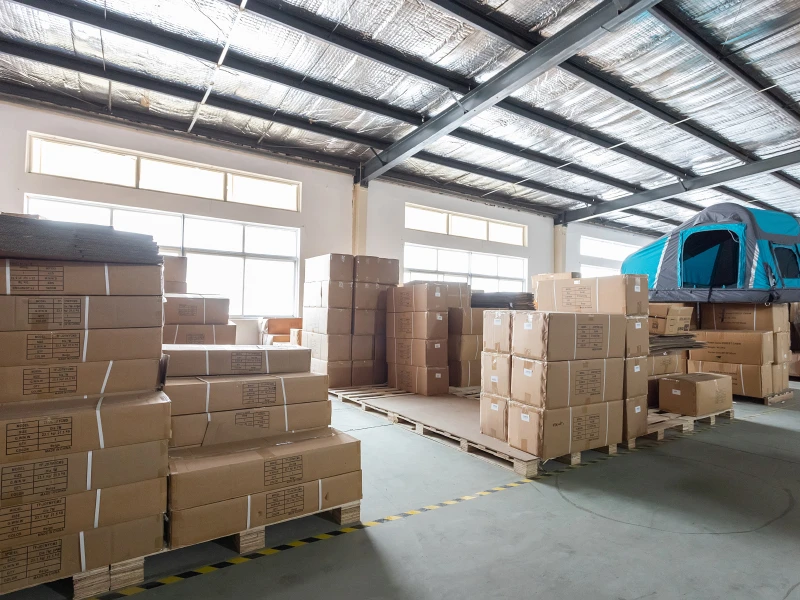
Retail-ready packing is where small mistakes become expensive. Check the carton against the packing list, confirm quantities per carton, verify the barcode scans, and confirm the manual and any accessories are actually inside. Open at least one carton from the first pallet and one from the last, since mixed cartons usually happen at the end of a run when stock runs short. Photograph the pallet, the carton faces and the contents. If a claim comes later, those photos are the difference between a credit note and an argument.
Running an audit you can repeat
A one-off visit tells you about that day. A repeatable checklist tells you about the factory. Write yours down with the same sections every time: materials, beam testing, seams, hardware, assembly, packing, and the paperwork trail. Score it, date it, and keep the old versions so you can see drift, because quality usually slides slowly rather than falling off a cliff. Book a pre-production meeting to agree the standard, a during-production visit when 20 to 30 percent is done, and a final inspection before release. Good inflatable tent factory QC is unglamorous and mostly administrative, which is exactly why it works.
FAQ: inflatable tent factory QC
How long should a pressure hold test run? Commonly 12 to 24 hours at working pressure, with the acceptable drop set in your own specification and the temperature logged.
What sampling level should I use? Many buyers work to ISO 2859-1 with limits around 2.5 for major and 4.0 for minor defects. Agree the numbers before production starts.
How do I tell a valve leak from a puncture? Test the valve on its own first. A slow valve core mimics a pinhole in the beam.
Should I inspect every unit? No. Use agreed sampling, then inspect packing thoroughly, since carton errors cost the most to fix downstream.
Ask us how our production is inspected. Start with our [inflatable rooftop tent range](https://www.playdooutdoor.com/product-category/rooftop-tent/) or send your checklist to [our team](https://www.playdooutdoor.com/contact/).

