Rooftop tent sampling is the stage that decides whether your launch lands on time, and it is also the stage everyone tries to compress. Cutting it rarely saves weeks. It usually moves the delay to the container and multiplies the cost, because a mistake found in a sample is a phone call and a mistake found after delivery is a warehouse full of product nobody ordered.
Start with a written brief, not a photo
Most sampling delays trace back to an unclear brief rather than a slow factory. A usable brief states the target dimensions, fabric and coating preferences, colour references, logo placement, pressure or structural targets, target weight, accessories included, certification needs for your market, target cost and target quantity. Sketches with dimensions beat a competitor’s screenshot, because a screenshot tells the factory what shape you like but not what you need. If you cannot specify something, say so explicitly and ask for options rather than leaving it blank, since factory guesses become your problem later.
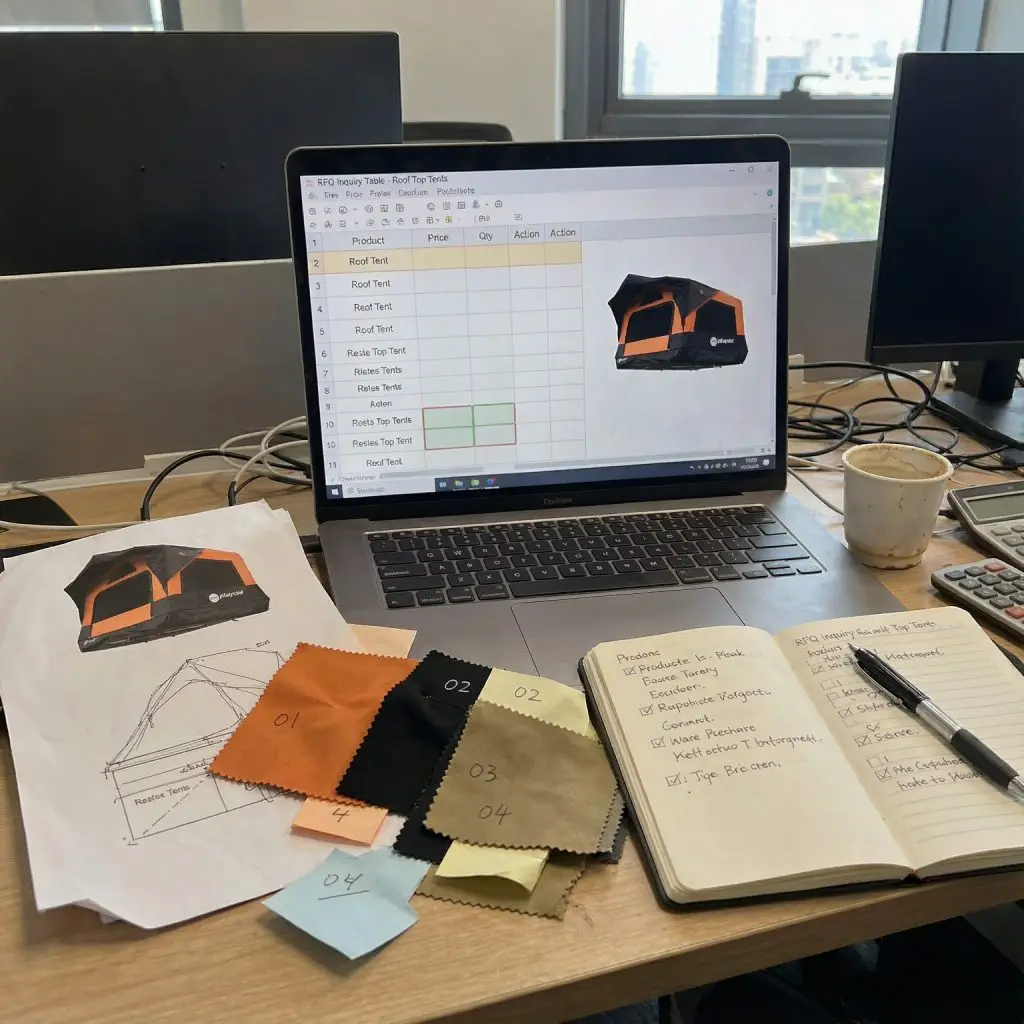
The three sample stages and why they are not the same thing
A prototype explores whether the concept works. Expect dimensional drift, different fabric from final, and hardware that is close but not exact. Its job is to answer whether the shape and size are right.
A pre-production sample is built on the real patterns with the specified materials, and it is the one you test, photograph, and possibly certify. Its job is to prove repeatability.
A golden sample, or sealed reference sample, is a pre-production unit both parties sign off and keep, often one at the factory and one with you. Its job is to settle disputes, because every later argument compares product against a physical object rather than an email from eight months ago. Treat each stage as buying information, not as a formality to get through.
How many rounds to expect, honestly
Two to three rounds is normal for a rooftop tent sampling programme, especially if you are changing structure rather than colour. Round one usually surfaces fit issues, such as door geometry, ladder reach, packed height, or annex alignment. Round two handles materials and finish. Round three, if needed, tidies details. What pushes the count up is late input rather than factory incompetence. Every colour added after approval, every hardware swap after patterns are cut, and every “while we are at it” change restarts part of the cycle. Decide your changes before round one, not during round three.

What to put in writing before approving
Approval by silence is how disputes start. When you sign off a sample, record the sample’s identifying details, the date, the specification version it represents, and anything explicitly excluded from approval, such as colour shade that still needs confirmation under a light box. Confirm the moulds or patterns it was built on, and whether any changes to those patterns require re-approval. Ask for photographs of the approved unit from fixed angles and keep them with the paperwork, since a signed document and a photo together are hard to argue with.
Testing during rooftop tent sampling, not after
Sampling is the cheapest moment to test. If your market needs a flame retardancy report, a chemical compliance statement, or an IP rating for bundled electrics, arrange it on pre-production units rather than first-run stock. Ask the lab what quantity of sample material they need, because that may affect how many units you request. Testing also tells you things customers eventually will, such as how the fabric behaves after weathering or whether a zip survives grit cycles. The cost of that testing is small compared with recalling a product category.
Once your sample is approved and locked, the timeline question becomes production scheduling. Our [rooftop tent production lead time guide](https://www.playdooutdoor.com/rooftop-tent-production-lead-time-guide/) covers where those weeks actually go, our [RFQ guide](https://www.playdooutdoor.com/rooftop-tent-rfq-quote-guide/) covers what to send when you are ready to quote, and our [inflatable rooftop tents](https://www.playdooutdoor.com/product-category/rooftop-tent/inflatable-rooftop-tent/) show the platforms most programmes start from.
FAQ: rooftop tent sampling
How long does rooftop tent sampling take? Commonly several weeks per round including production and shipping. The count of rounds matters more than the length of each one.
What is a golden sample for? It is a signed reference unit kept by both sides so later disputes compare product against a physical object.
Can I skip the prototype stage? Only if nothing structural changes. Anything new in shape, size or construction deserves a prototype round.
When should testing happen? On pre-production units, so any certificate covers the same materials and patterns as your bulk order.
Reviewed by the PlayDo Outdoor product team, October 2026. Sample timelines vary by season and by how early the brief is finalised.