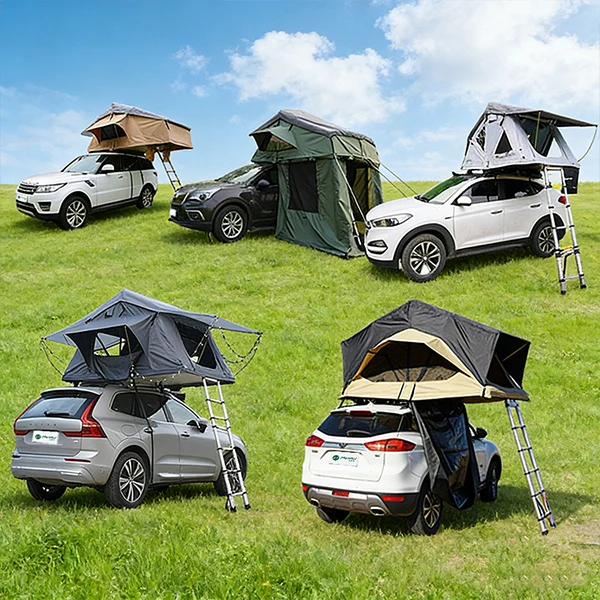
A soft shell rooftop tent sits in the middle of the market and gets overlooked for it. It is cheaper than a hard shell and less novel than an inflatable, which means buyers compare it against both and often against the wrong one. The useful comparison is practical: how long setup takes, how tall your vehicle becomes, and what happens to each design after four summers in the sun.
Where a soft shell rooftop tent actually comes from
The design is older than most buyers realise. A folded fabric platform on a aluminium or composite base, opened out over a ladder, with steel or aluminium poles holding the canopy up. That history matters because the design has been refined for a long time and the failure points are well known: pole joints, the seam where the base folds, and the travel cover zip that takes the most abuse on every single trip. Buyers who like knowing exactly what they own tend to prefer that transparency.
Setup time, honestly measured
An inflatable tent you let the pump do the work and stand around for three or four minutes. That gap grows when it is dark, raining, or you have already driven nine hours. A soft shell rooftop tent needs you to walk around the vehicle releasing straps, pull the ladder, unfold, then fit several poles, and pole bags have a habit of being at the wrong end of the vehicle. Poles also mean parts you can lose, though most designs keep each pole captive in the fabric so nothing actually comes off. Inflatables remove that step entirely, which is their real advantage rather than headline setup numbers.
Packed height and what it costs you every day
This is where the soft shell wins. Inflatable beams need a certain thickness to hold shape, and even a well packed inflatable tent usually sits taller when closed than a folded fabric platform of the same floor size. That shows up in three places: garage clearance, wind noise at highway speed, and fuel use over a year of driving. If your vehicle lives in an underground car park or you drive a lift and have to remove the tent between trips, packed height matters more than any feature on the spec sheet.
Heat, condensation and ageing
Fabric behaviour separates these two after the first season. Canvas and poly-cotton used in many soft shell designs breathe better than coated synthetics, so they tend to build less condensation overnight. They also absorb water, which means they must be dried properly before storage or they will mildew. Inflatable tents use coated synthetics that shed water fast and dry quickly, but they rely on air beams whose welded seams fatigue slowly with pressure cycling and UV exposure. Neither is better outright. Ask what the fabric treatment is and whether replacement covers are sold separately, because covers wear before structure does.
[插图位置 2]
实拍:软壳车顶帐的 PVC 防尘罩拉链与绑带细节,边缘有轻微磨损(图库关键词:rooftop tent travel cover zip wear detail)。
Choosing by use rather than by type
Weekend trips with two people and a dog: either works, and packed height should decide it. Long trips with small children: the faster setup of an inflatable tends to win, because you do it tired more often. Remote travel where field repair matters: a soft shell has fewer failure modes to worry about, though a punctured beam is patchable in minutes while a bent pole usually is not. Buyers running a rental fleet often land on soft shells for the same reason fleets buy simple vehicles, since fewer unique parts means less downtime.
What to check before paying
Confirm the dynamic load rating against your vehicle’s roof limit, since soft shells can be heavier than they look once wet. Check whether the base is insulated, because that decides how cold the floor feels in shoulder season. Ask how the shipping Weight compares with the static load figure on the spec sheet, then verify both against your rack. Ask how long replacement covers take to ship, because that single answer tells you how much the supplier expects the product to be used.
If you want structure before you commit, read our [rooftop tent factory audit checklist](https://www.playdooutdoor.com/rooftop-tent-factory-audit-checklist/) for what a supplier should be able to show you, then compare the fold out and air beam designs side by side in our [soft shell rooftop tent range](https://www.playdooutdoor.com/product-category/rooftop-tent/soft-shell-rooftop-tent/) and our [inflatable rooftop tents](https://www.playdooutdoor.com/product-category/rooftop-tent/inflatable-rooftop-tent/).
FAQ: soft shell rooftop tent
Is a soft shell rooftop tent lighter than an inflatable? Often yes when packed, though the difference depends on base construction. Check shipping weight against your dynamic roof limit.
Which sets up faster? Inflatable usually wins, because poles are steps you do yourself while a pump does the work for you.
Do canvas shells breathe better? Generally yes, which reduces condensation, but they need drying before storage to avoid mildew.
What fails first on a soft shell? Typically the travel cover zip and the pole joints. Ask whether the cover is sold as a spare part.
Reviewed by the PlayDo Outdoor product team, October 2026. Load figures should always be checked against your vehicle handbook.