




The single innovation behind every inflatable rooftop tent is the air beam — a pressurized tube that does the job of a metal pole, but better in almost every way that matters for camping. Understanding how this technology works makes it easy to see why inflatable tents set up faster, weigh less, and handle wind so well. Here’s a clear breakdown.

From Metal Poles to Air Beams
A traditional tent relies on rigid poles — aluminum or fiberglass — that you thread through sleeves to create tension and hold the fabric up. It works, but poles are heavy, easy to lose, slow to assemble, and prone to bending or snapping.
An air beam replaces that rigid pole with a sealed tube of pressurized air. When inflated, the tube becomes stiff enough to carry the full structural load of the tent. The genius is that a well-designed air beam is both rigid *and* flexible: it holds its shape under normal loads, yet flexes and rebounds under sudden gusts instead of failing.
The Two-Layer Beam: Bladder + Sleeve
A quality air beam isn’t just a balloon. It’s a two-part system engineered for durability:
- Inner bladder (TPU):The airtight core is usually made of TPU (thermoplastic polyurethane), a material prized for being strong, elastic, and excellent at holding pressure over long periods. TPU is far more puncture- and fatigue-resistant than cheap PVC.
- Outer sleeve (protective fabric):Wrapped around the bladder is a tough, abrasion-resistant woven sleeve. This casing takes the wear and tear, shields the bladder from UV and rubbing, and constrains the beam so it holds a precise shape when inflated.
This bladder-and-sleeve construction is what separates a durable, long-lasting tent from a gimmick. It’s also why quality air beams are repairable — the bladder can be patched, and the protective sleeve prevents most damage from reaching it in the first place.
Unified Low-Pressure vs. High-Pressure Systems
Not all inflation systems are equal. There are two main approaches:
High-pressure, multi-tube systems inflate several separate beams to a high PSI. They can be stiff, but they require more pumping effort, each tube is a separate point of failure, and higher pressure puts more stress on seams.
Unified low-pressure systems connect all the beams through a single valve and inflate them evenly to a modest pressure — typically around 6–7 PSI. The advantages are significant:
- One valve, one pump session— the whole tent inflates together, fast.
- Even structural tensionacross the whole frame, so no weak links.
- Lower stress on seams and materials, which improves long-term durability.
- Easier deflationfor a quick, clean pack-down.
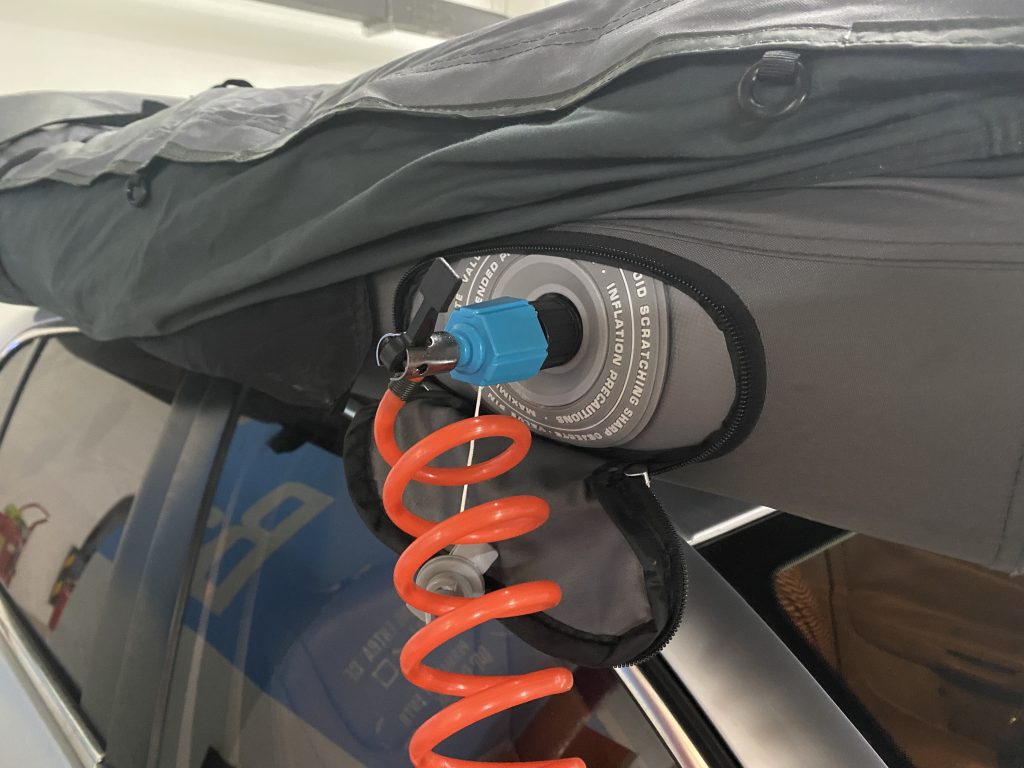
PlayDo Outdoor’s inflatable rooftop tents are built around a patented unified low-pressure air-beam system, which is a core reason they inflate quickly, hold shape reliably, and last. You can see the technology in the [Shell Wing and SKIFF inflatable rooftop tents](https://www.playdooutdoor.com/product-category/rooftop-tent/).
Why Air Beams Handle Wind So Well
It seems counterintuitive that “air” could beat “metal” in a storm, but physics is on the air beam’s side. When a strong gust hits:
- A rigid metal poleabsorbs the force by bending — and past a certain point, it stays bent or snaps.
- An air beamflexes with the gust, momentarily deforming, then the internal pressure pushes it back to its original shape.
This elastic behavior means air-beam tents can ride out gusts that would permanently damage a pole tent. There are also simply no rigid poles to break, eliminating the most common rooftop-tent failure.
The Everyday Benefits of the Technology
All of this engineering translates into real advantages you feel on every trip:
- Speed— one pump inflates the whole tent in 5–7 minutes.
- Light weight— no bundle of metal poles; many models weigh under 30 kg.
- Safety— no rigid poles to swing or pinch, ideal for families.
- Compact packing— soft beams fold flat into a low-profile cover.
- Resilience— flex-and-rebound performance in wind, plus repairable beams.
The Bottom Line
Air-beam technology isn’t a novelty — it’s a genuine structural upgrade over metal poles for most camping scenarios. The combination of a durable TPU bladder, a protective outer sleeve, and a unified low-pressure system delivers a tent that’s faster, lighter, safer, and more wind-resilient than a traditional pole design, at a better price than a hard shell.
As a rooftop tent manufacturer with 100+ patents and 11+ years of R&D, [PlayDo Outdoor](https://www.playdooutdoor.com/) has helped drive this technology forward, exporting inflatable rooftop tents to 120+ countries with full OEM/ODM support.
Frequently Asked Questions
Q: What material are inflatable tent air beams made of?
The airtight inner bladder is typically TPU (thermoplastic polyurethane), chosen for strength, elasticity, and long-term air retention. It sits inside a tough, abrasion-resistant outer fabric sleeve that protects it.
Q: What pressure does an inflatable rooftop tent need?
Quality unified low-pressure systems inflate to around 6–7 PSI. This is enough for full rigidity while keeping stress on seams and materials low.
Q: Are air beams stronger than metal poles?
For camping loads, effectively yes. Air beams flex under sudden gusts and rebound, while metal poles can bend or snap permanently. Air beams also can’t be lost or mis-assembled.
Q: Can air beams be repaired if damaged?
Yes. The protective sleeve prevents most damage, and in the rare case of a puncture, the TPU bladder can be patched with a repair kit. Reputable makers supply spares.
Q: How long does it take to inflate an air-beam tent?
Typically 5–7 minutes with a hand or electric pump through a single valve — much faster than assembling multiple poles.
Q: Does a unified low-pressure system really matter?
Yes. It inflates the whole tent evenly through one valve, distributes tension without weak links, reduces material stress, and makes both setup and pack-down faster and more reliable.



