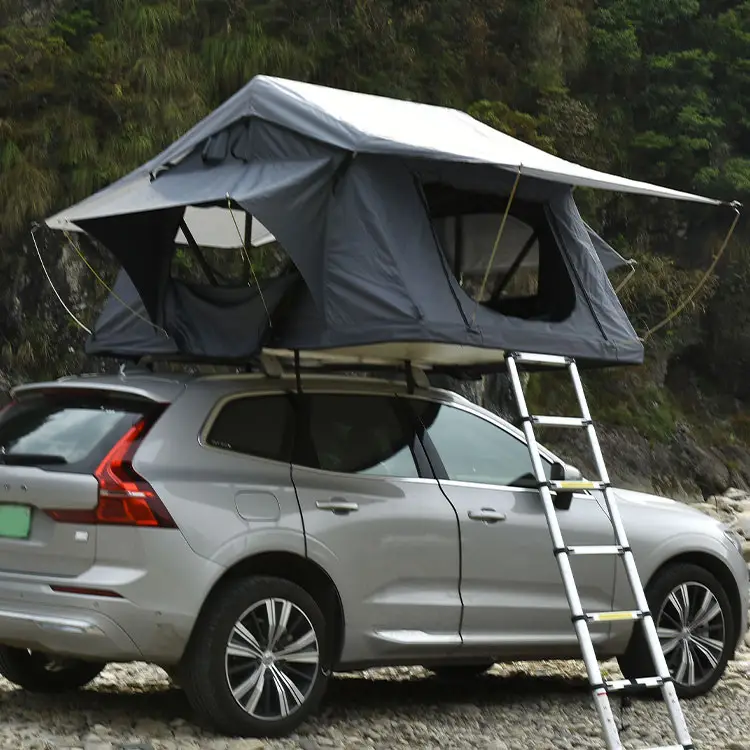
Choosing a rooftop tent used to be simple: soft-shell pole tents or hard-shell tents. Now there’s a fast-growing third option — the inflatable rooftop tent — and it’s changing how people think about the trade-offs. This guide compares all three types head-to-head so you can pick the right one for how you actually camp.

Quick Comparison Table
| Factor | Inflatable | Pole (Soft-Shell) | Hard-Shell |
| Setup time | 5–7 min | 10–15 min | 30 sec–2 min |
| Pack-down time | Fast | Slow | Fast |
| Weight | Light (often <30 kg) | Medium | Heavy (60–90 kg) |
| Interior space | Large | Large | Compact–medium |
| Wind resistance | Beams flex & rebound | Poles can bend | Very rigid |
| Fuel/aerodynamics | Good (low profile) | Fair | Poorer (tall case) |
| Price | Mid-range | Lowest | Highest |
| Best for | All-round value | Budget buyers | Speed-first users |
Setup and Pack-Down
Inflatable: One pump inflates the whole tent in about 5–7 minutes — no poles to sort, thread, or lose. Pack-down is equally quick: open the valve and fold.
Pole (soft-shell): The most time-consuming to pitch. You assemble and thread multiple poles every time, which can be frustrating in the dark or bad weather.
Hard-shell: The fastest by design — pop the shell and it’s up in under two minutes. This is the hard shell’s main advantage.
Verdict: Hard shells win on raw speed, but inflatable tents come remarkably close while being far lighter and cheaper — and both crush pole tents on convenience.
Weight and Vehicle Impact
Weight matters for your roof rack rating, your fuel economy, and how easy the tent is to install.
- Inflatabletents are the lightweight champions, with many two-person models under 30 kg. Their low, soft-pack profile also reduces wind drag.
- Poletents sit in the middle.
- Hard-shelltents are the heaviest, often 60–90 kg, and their tall rigid case hurts aerodynamics and fuel use.
Verdict: Inflatable tents are the easiest on your vehicle.
Durability and Wind Performance
There’s a common myth that “inflatable = fragile.” In reality, quality air beams use a tough TPU bladder inside an abrasion-resistant sleeve, and they flex in strong gusts and spring back — whereas rigid poles can bend or snap permanently under the same load.
- Inflatable:Excellent wind flexibility; no poles to break. Repairable with a patch kit in the rare event of a puncture.
- Pole:Vulnerable to bent or broken poles, the most common rooftop-tent failure.
- Hard-shell:Extremely rigid and tough, but the hard lid adds cost and weight.
Verdict: Hard shells are the most rugged, but inflatable tents are surprisingly resilient and avoid the #1 failure point of pole tents.
Comfort and Interior Space
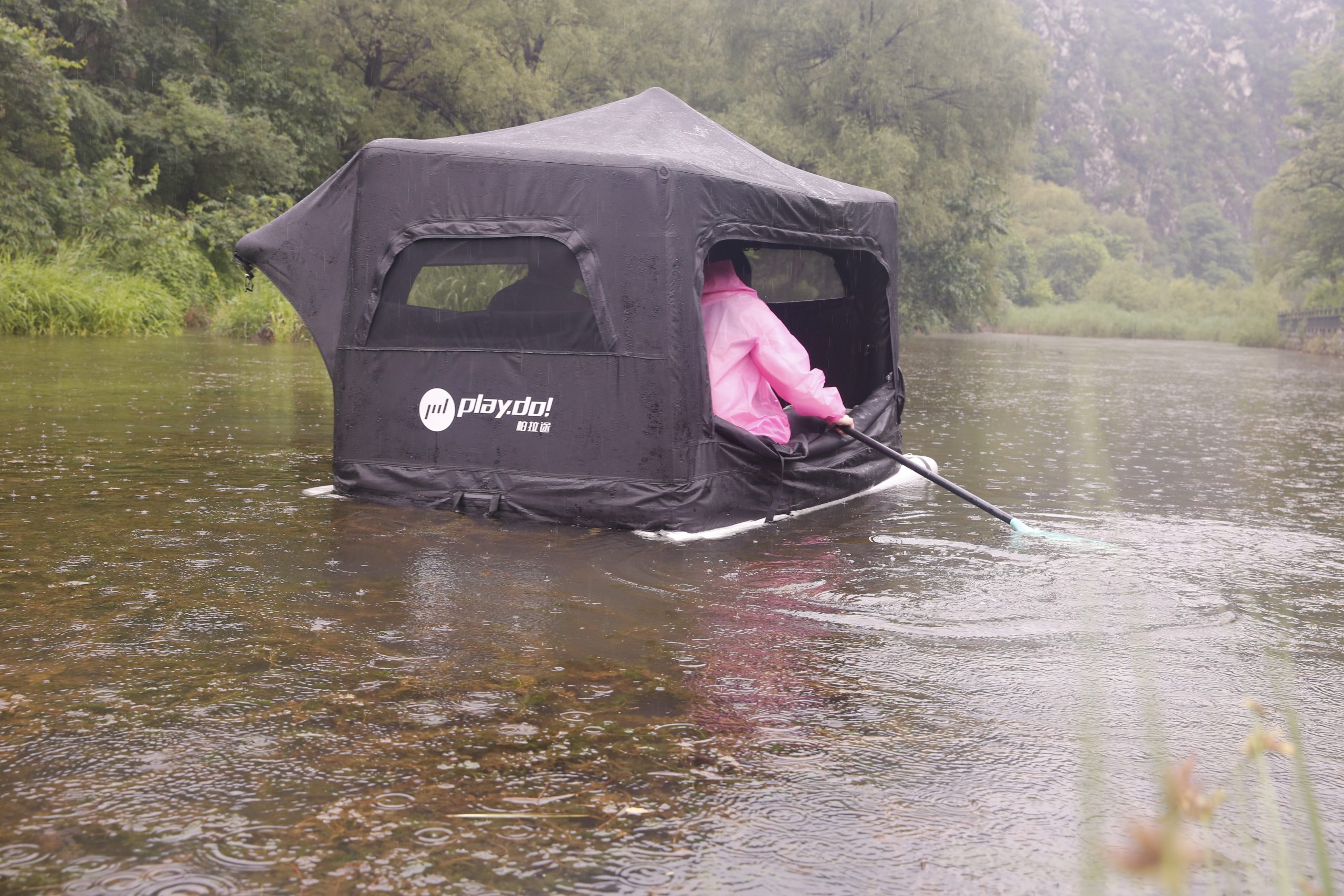
Air-beam geometry allows for tall, near-vertical walls and generous headroom, so inflatable tents often feel roomier than their packed size suggests. Pole soft-shells can also be spacious. Hard-shell tents, limited by their fixed case dimensions, tend to offer the least interior volume for the same footprint.
Verdict: Inflatable and pole tents lead on livable space.
Price and Value
- Pole tentsare the cheapest entry point but cost you time and pole reliability.
- Inflatable tentssit in the mid-range and deliver the best overall value — fast setup, light weight, and comfort without the hard-shell premium.
- Hard-shell tentsare the most expensive, and you pay for speed and rigidity.
Verdict: For most buyers, inflatable rooftop tents offer the strongest balance of price and performance.
Which Rooftop Tent Should You Choose?
- Choose inflatableif you want the best all-round mix of fast setup, light weight, comfort, and value — ideal for overlanders, families, and frequent campers.
- Choose poleif you’re on the tightest budget and don’t mind slower setups.
- Choose hard-shellif setup speed is your single top priority and weight and price are not concerns.
For most campers in 2026, the inflatable rooftop tent is the smartest default — which is exactly why the category is growing so fast.
As a specialized rooftop tent manufacturer, [PlayDo Outdoor](https://www.playdooutdoor.com/) produces inflatable, pole, and hard-shell rooftop tents, so you can compare real options side by side. Browse the [full rooftop tent collection](https://www.playdooutdoor.com/product-category/rooftop-tent/) to see the differences in person.
Frequently Asked Questions
Q: Is an inflatable rooftop tent better than a hard shell?
It depends on your priorities. Hard shells set up fastest and are the most rigid, but they’re heavy and expensive. Inflatable tents are lighter, cheaper, and more comfortable, with setup nearly as fast — making them the better all-round choice for most campers.
Q: Are inflatable rooftop tents as durable as pole tents?
Yes, often more so. They eliminate the bent/broken pole problem, and quality air beams flex in wind and rebound. They’re also repairable with a patch kit.
Q: Which rooftop tent is lightest?
Inflatable rooftop tents are typically the lightest, with many models under 30 kg — lighter than most hard shells.
Q: Which type is best for families?
Inflatable tents are excellent for families: quick, tool-free setup with no rigid poles to swing around, plus roomy, standing-height interiors.
Q: Do hard-shell tents last longer than inflatable ones?
Both can last for years with proper care. Hard shells are more rigid, but inflatable tents avoid pole failure and their beams are repairable, so lifespan is comparable when you buy quality.