




B2B Outdoor Equipment Insights · Published July 9, 2026
The global glamping market is projected to reach USD 12 billion by 2030, growing at a CAGR of over 10%. Within this explosive growth, inflatable camping tents have emerged as one of the most disruptive product categories — offering a compelling combination of rapid deployment, structural innovation, and premium guest experience that traditional pole tents simply cannot match.
For glamping site operators, outdoor distributors, and B2B buyers, understanding why inflatable camping tents are reshaping the industry is essential for making informed sourcing decisions. This article examines the market drivers, material technology, and strategic considerations behind this trend.

The Glamping Boom: Market Context for 2026
The inflatable camping tent market is experiencing significant growth, driven by the convergence of several powerful consumer and industry trends:
The growth is fueled by several factors: consumers increasingly seek immersive nature experiences without sacrificing comfort; glamping operators need structures that can be deployed quickly for seasonal operations; and material technology advances have made inflatable tents more durable, weather-resistant, and comfortable than ever before.
According to industry research, the inflatable tents market is being driven by “increasing consumer interest in outdoor activities such as camping, glamping, and festivals” — with demand concentrated in North America, Europe, and rapidly emerging Asia-Pacific markets.
What Makes Inflatable Tents Different from Traditional Camping Tents?
Traditional camping tents rely on rigid poles — typically fiberglass, aluminum, or steel — to create structural support. Inflatable tents replace these poles with high-pressure air beams, usually made from reinforced PVC or TPU (thermoplastic polyurethane) tubing.
This fundamental difference creates cascading advantages:
| Feature | Traditional Pole Tent | Inflatable Air Beam Tent |
|---|---|---|
| Setup Time (4-person tent) | 20–40 minutes | 5–10 minutes |
| Packed Weight | Heavier (metal poles) | Lighter (air beams) |
| Structural Flexibility | Rigid, can bend/break | Flexible, absorbs wind force |
| Wind Resistance | Moderate (poles can fail) | High (air beams flex and recover) |
| Internal Space | Limited by pole geometry | Maximized (curved air beams) |
| Transport Volume | Larger (rigid poles) | Compact (deflates fully) |
| Maintenance Risk | Bent/broken poles | Punctures (patchable)
|
For commercial glamping operators, the most significant advantage is operational: a single staff member can set up an inflatable tent in under 10 minutes using an electric pump. A comparable pole tent of the same size often requires two people and 30+ minutes. At scale — say, a 20-tent glamping site — this difference translates to days of labor savings per season.
Key Advantages Driving Adoption at Glamping Sites
Rapid Setup and Takedown
Glamping businesses operate on seasonal cycles. Sites may need to set up an entire village of tents in spring and take them down in autumn. Inflatable tents cut this labor dramatically. With an electric pump delivering 2.0–3.0 PSI, a large inflatable glamping tent (4×3×2.2m) can be fully erected in 8–10 minutes.
For event-based glamping — pop-up luxury camps at festivals, corporate retreats, or weddings — this rapid deployment is even more critical. Inflatable tents can be set up the morning of an event and taken down the same evening.
Superior Structural Stability
Unlike rigid poles that can bend, snap, or fatigue over time, air beams are inherently resilient. When subjected to wind force, an inflatable structure flexes and returns to its original shape. This makes inflatable tents particularly suited for exposed glamping sites in coastal, mountain, or desert environments.
Modern air beams are engineered to withstand significant pressure — typically rated for 6–8 PSI operating pressure with safety margins well above that. High-quality PVC air columns from reputable manufacturers are tested for thousands of inflation cycles without structural degradation.
Enhanced Guest Comfort
Glamping guests expect a hotel-quality experience in an outdoor setting. Inflatable tents deliver on this expectation through:
- Maximized interior volume:Curved air beam structures create more usable headroom and floor space than angular pole designs.
- Panoramic windows:Large mesh and clear-window designs provide natural light and ventilation while keeping insects out.
- Thermal inner liners:Custom-fit insulation layers (like PlayDo’s thermal inner liner) regulate temperature for four-season comfort.
- Quiet structure:No metal poles means no creaking or vibration in wind — a significant comfort upgrade for light sleepers.
- Integrated accessories:Air beam architecture supports modular add-ons: lighting hooks, storage pockets, and ventilation ports.
Material Innovation: The Technology Behind Modern Inflatable Tents
The rapid adoption of inflatable tents would not be possible without significant advances in material science. B2B buyers should understand the key material specifications that determine product quality and longevity.
Air Beam Technology
Modern inflatable tent air beams use dual-layer construction: an inner bladder (typically TPU) that holds the air, and an outer sheath (reinforced PVC) that provides structural strength and abrasion resistance. This dual-layer design means that even if the inner bladder develops a slow leak, the outer sheath maintains structural integrity long enough for safe repair.
Key specifications to evaluate:
Operating pressure: 2.0–3.0 PSI is standard. Higher pressure (up to 8 PSI in premium models) provides greater rigidity but requires more robust valve systems.
Beam diameter: 10–15 cm for standard tents; 15–20 cm for large glamping structures.
Wall thickness: 1.2–2.0 mm for the PVC outer sheath, depending on application.
Fabric Specifications
210D Oxford cloth: The workhorse fabric for mid-range inflatable tents. Good balance of weight, durability, and cost. Suitable for family camping and standard glamping use.
420D Oxford cloth: Premium fabric for commercial-grade applications. Higher tear strength and UV resistance, making it ideal for glamping sites with year-round or multi-season operation.
950D PVC: Heavy-duty fabric used in PlayDo’s Sailing Tent model. Maximum durability for extreme weather exposure and long-term commercial deployment. The thick PVC coating provides superior waterproofing (5,000mm+ hydrostatic head) and UV stabilization.
Valve and Pump Systems
The inflation valve is a critical component that is often overlooked. Premium tents use Boston valves or Halkey-Roberts valves — both industry standards for reliable, leak-free inflation. Electric pumps with pressure regulation (preventing over-inflation) are recommended for commercial use.
B2B Sourcing Strategies for Glamping Operators and Distributors
For B2B buyers entering the inflatable tent market, the sourcing strategy should be tailored to the end-use application:
For Glamping Site Operators
Prioritize durability and guest experience over cost. Commercial-grade tents with 420D or heavier fabric, premium air beam systems, and thermal liner compatibility will deliver better ROI despite higher initial investment. Look for manufacturers offering replacement air beams and repair kits as part of the package.
For Distributors and Retailers
Build a tiered product range: entry-level 210D tents for the consumer market, mid-range 420D models for serious campers, and premium commercial-grade tents for glamping operators. This tiered approach captures multiple price points and customer segments.
For OEM/ODM Brand Partners
Customization is the key to market differentiation. Leading manufacturers like PlayDo Outdoor offer:
- Custom exterior colors and patterns matched to brand identity
- Private-label branding on fabric, packaging, and accessories
- Custom tent dimensions and configurations for specific market needs
- Integrated smart features: LED lighting, USB charging ports, climate control ports
- Bespoke window and door configurations for ventilation optimization
With 11+ years of manufacturing experience and 100+ patents, PlayDo Outdoor’s Tianjin facility offers vertically integrated production — from fabric sourcing to final assembly — ensuring quality consistency across large-volume orders. Production capacity of up to 10,000 tents within 10 working days supports both seasonal glamping deployments and retail distribution.
Real-World Applications: Where Inflatable Tents Excel
Inflatable camping tents are finding applications far beyond traditional camping:
1. Glamping Resorts: Luxury outdoor accommodations where guests expect hotel-grade comfort in natural settings. Inflatable dome tents with panoramic windows and thermal liners create Instagram-worthy spaces that command premium nightly rates ($200–$500+ per night).
2. Festival and Event Camping: Pop-up luxury camps at music festivals, sporting events, and corporate retreats. The rapid setup/takedown cycle is ideal for temporary installations that need to be deployed and removed within tight timeframes.
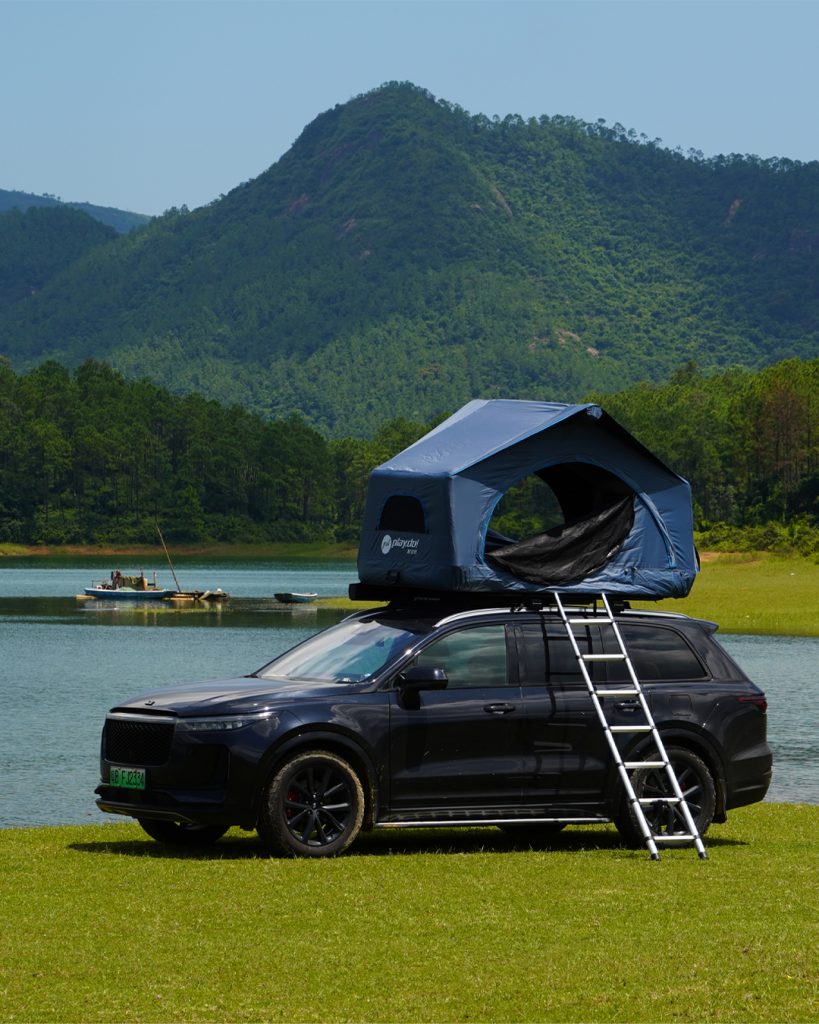
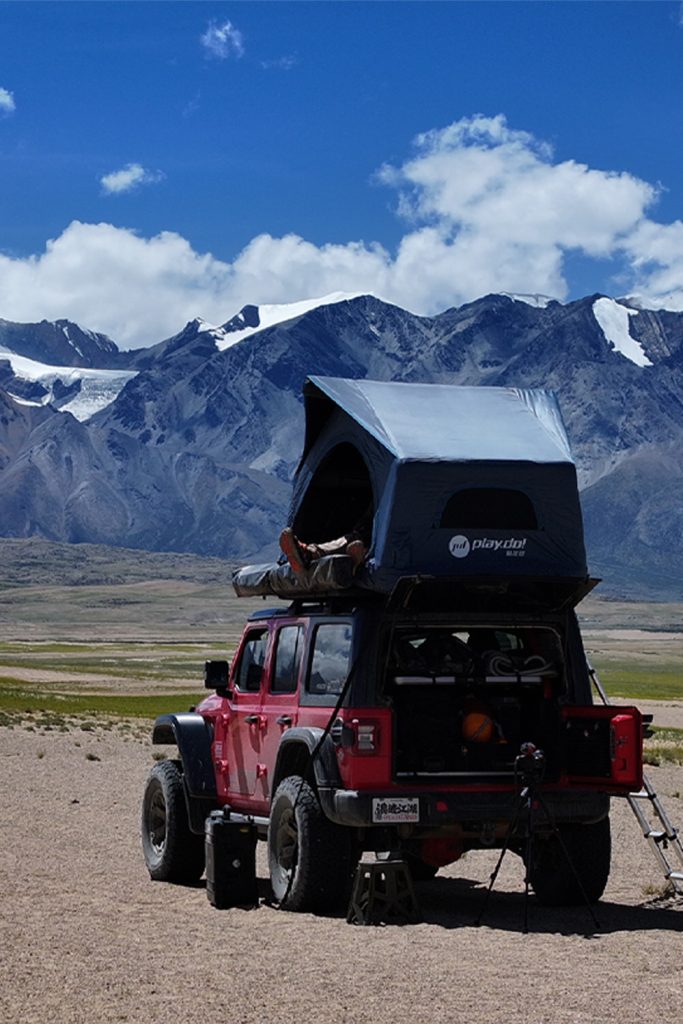
3. Family Vehicle Camping: SUV-compatible inflatable tents (like PlayDo’s Air House Tent, 4×3×2.2m) provide spacious, comfortable shelters for family road trips and weekend camping — transforming a vehicle into a mobile home base.
4. Exhibition and Commercial Spaces: Inflatable exhibition canopies serve as branded event spaces, trade show booths, and outdoor retail environments. Custom printing on 200g polyethylene fabric with PVC air columns creates eye-catching commercial displays.
5. Emergency and Humanitarian Shelter: The rapid deployment and weather-resistant properties make inflatable tents valuable for disaster relief and temporary housing — an emerging market segment with significant growth potential.
Conclusion
Inflatable camping tents are not a passing trend — they represent a fundamental shift in how outdoor shelter is designed, deployed, and experienced. The convergence of glamping market growth, material technology advances, and operational efficiency demands has created a product category with sustained growth potential.
For B2B buyers — whether glamping operators, distributors, or brand partners — the strategic advantages are clear: faster setup, superior guest experience, lower maintenance risk, and extensive customization opportunities. As the glamping market continues its double-digit growth trajectory through 2030, inflatable tents will play an increasingly central role.
The key to success lies in partnering with an experienced manufacturer that understands both the technical requirements and the commercial dynamics of this evolving market. With over a decade of OEM/ODM expertise, 100+ patents, and a vertically integrated production facility, PlayDo Outdoor is positioned to help B2B partners capitalize on this industry transformation.
FAQ: Inflatable Camping Tents for B2B Buyers
How long do inflatable camping tents last in commercial use?
With proper maintenance, commercial-grade inflatable tents (420D+ fabric, reinforced PVC air beams) typically last 3–5 years in seasonal glamping use. Premium models with 950D PVC fabric can last 5–8+ years. Key factors include UV exposure frequency, inflation/deflation cycles, and storage conditions.
What happens if an air beam gets punctured?
Modern inflatable tents use dual-layer air beams. If the inner TPU bladder is punctured, the outer PVC sheath maintains structural integrity for hours. Repair is simple — most tents include patch kits, and replacement air beams are available from manufacturers. A typical puncture repair takes 10–15 minutes.
Can inflatable tents withstand strong winds and heavy rain?
Yes. Quality inflatable tents are tested for wind resistance up to 60–80 km/h. The flexible air beam structure actually performs better than rigid poles in strong winds because it flexes rather than breaks. For heavy rain, look for tents with 3,000mm+ hydrostatic head rating and fully sealed seams.
What is the MOQ for OEM inflatable camping tents?
MOQs typically start at 50–100 units for basic OEM customization (logo, color) and 200+ units for fully custom designs with new patterns or dimensions. PlayDo Outdoor offers flexible MOQs for first-time buyers and can scale production up to 10,000 units per order.
Are inflatable tents suitable for four-season use?
With appropriate thermal inner liners and proper site selection, yes. Premium inflatable tents like PlayDo’s models are designed for four-season use. The thermal inner liner traps an insulating air layer, and the air beam structure itself provides some natural insulation. However, extreme winter conditions (heavy snow load) require specific models rated for snow loading.



