




When buyers compare rooftop tents, fabric is often reduced to a number such as GSM or denier. Those figures matter, but they do not tell the whole story. A rooftop tent fabric also changes how the shelter feels, how it manages moisture, how it packs, how much it weighs and where the product fits in a brand’s price range.
For outdoor brands, the better question is not ‘Which fabric is best?’ It is ‘Which fabric makes sense for this product, market and customer?’
Coated Oxford fabric: practical and versatile
Oxford fabric is widely used in outdoor products because it offers a useful balance of durability, structure and manufacturability. When the fabric is coated, the coating can contribute to water resistance and help the outer surface handle wet conditions.
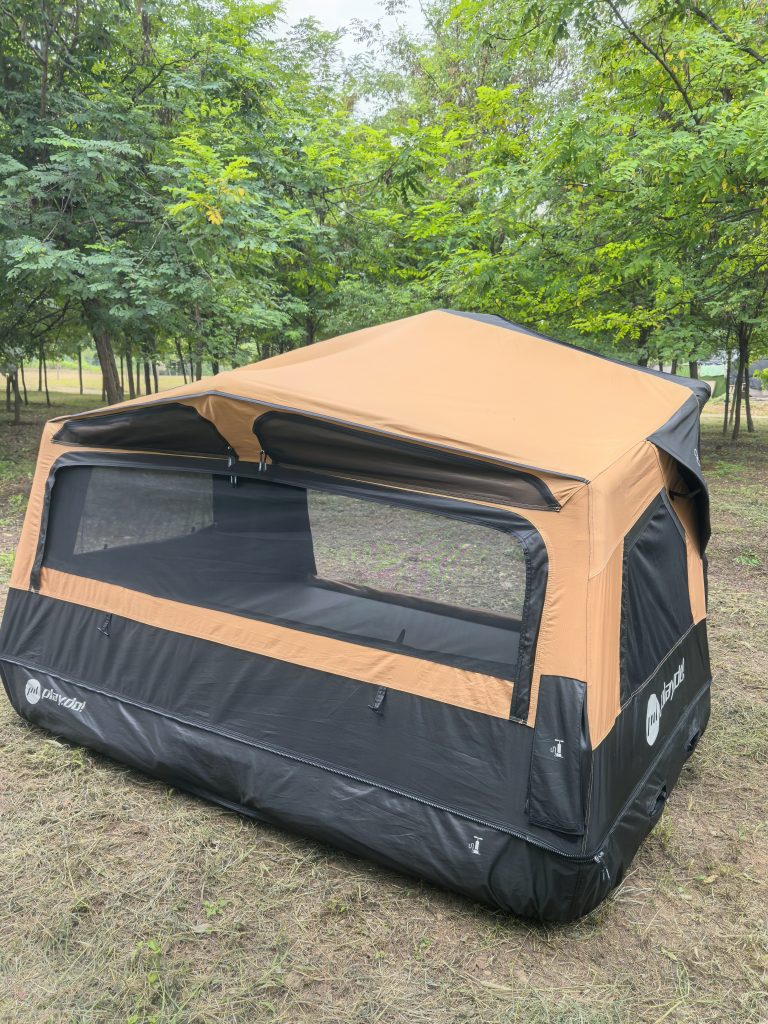
A coated Oxford construction is often a straightforward choice for a product positioned around weather protection, durability and easy-care use. It also works well when the buyer wants a technical-looking fabric with a defined coating specification.
Polyester-cotton: softer feel and stronger focus on breathability
Polyester-cotton blends change the character of a tent. Compared with heavily coated technical fabrics, a breathable textile can create a softer, more fabric-like interior experience and may be attractive for buyers who care about comfort and moisture management.

That does not mean polyester-cotton is automatically better for every climate. The fabric still needs to be evaluated as part of the whole tent system, including rain protection, seam treatment, ventilation, inner layers and intended season.
Do not choose fabric by GSM alone
Fabric weight is useful for comparing constructions, but it should not be used as a shortcut for overall performance. A heavier fabric may improve robustness in one application, while a lighter fabric may support a more portable product. Coating type, weave, finishing, seam construction and the final tent design all matter.
Match the fabric to the product position
A family-oriented rooftop tent may prioritize comfort, interior feel and ventilation. A lightweight product may place more value on packed size and weight. A rugged overlanding product may emphasize abrasion resistance and weather protection. The fabric should support the intended positioning instead of becoming a feature chosen in isolation.
Look at real PlayDo product configurations
PlayDo’s current rooftop tent range shows why material choices can vary by model. Starry Sky 2 uses 200G untreated polyester-cotton and is positioned around breathable fabric and condensation management. Flying Fish also uses 200G uncoated polyester-cotton, while SKIFF uses 300D Oxford cloth with a black glue coating. These are different product constructions aimed at different combinations of portability, comfort and weather performance.
Questions to ask a fabric supplier
For a new rooftop tent project, ask for the exact fabric construction rather than a generic material name. Confirm fiber blend, denier or GSM, coating, waterproof test method if applicable, colorfastness requirements, seam treatment and available colors. Request a physical sample before approving the final material.
Material decisions affect packaging too
Fabric choice can influence folding thickness and packed volume. A material that is comfortable on the showroom floor still needs to perform when the tent is folded, stored and shipped. For B2B buyers, the material discussion therefore belongs in the same conversation as packed size and logistics.
A good manufacturer should be able to explain why a particular fabric is used on a specific model and what trade-offs it creates. That makes the discussion much more useful than simply asking for the heaviest fabric available.
FAQ
Q: Is Oxford fabric better than polyester-cotton for rooftop tents? A: Neither is universally better. The right choice depends on the product’s weather, weight, comfort, durability and price requirements.
Q: What fabric details should a buyer request? A: Ask for the construction, weight, coating or finish, performance test method and a physical sample.
Q: Can the fabric be customized? A: Many OEM projects can customize colors and, depending on the product and MOQ, material configurations.
Suggested Internal Links
Starry Sky 2 – https://www.playdooutdoor.com/product/starry-sky-2-inflatable-rooftop-tent/
Flying Fish – https://www.playdooutdoor.com/product/flying-fish-inflatable-rooftop-tent/
SKIFF – https://www.playdooutdoor.com/product/skiff-inflatable-rooftop-tent/



