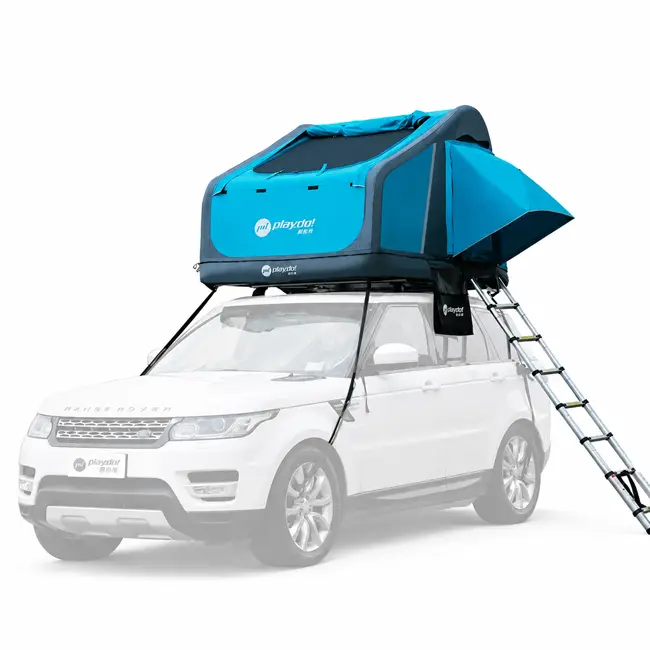
Inflatable rooftop tent fuel economy is the number most buyers skip until the first fuel receipt shocks them. Strapping a tent to the roof changes how your vehicle moves through air, and that change has a price. The price is smaller than the rumors say, and most of it is fixable.
How inflatable rooftop tent fuel economy really works
Drag grows with speed. Below about 80 km/h, wind resistance is a minor player, and a roof tent barely registers at the pump. Above that, the air your car pushes aside every second starts to matter, and a box on the roof makes the job harder. Weight adds a little, mostly during acceleration and on hills, but at highway cruise it is the shape up top that decides your miles per gallon.
A soft-shell inflatable tent typically costs 2 to 4 mpg on the highway. A hard-shell case shaped like a clamshell loses a bit more because it sits taller and blocks a larger front face. Every 10 cm of added height catches more air than 20 kg of gear ever will, so a low, deflated profile is kinder to your tank than a bulky hard case.
How to improve inflatable rooftop tent fuel economy
Take the tent off when you are not camping. This one habit recovers almost all the loss, and an inflatable model deflates and stores inside the cabin or trunk in minutes. If you must leave it mounted, keep the tires at the pressure your door card recommends, ease off to a calmer 105 km/h on long highway stretches, and skip the roof box on top of the tent. A box-on-tent stack is the worst case for drag.

Numbers you can actually plan around
A driver covering 20,000 km a year at 8 L/100 km with a 3 mpg loss spends roughly an extra $200 to $300 annually, depending on local fuel price. That is real money, but it is also less than one paid campsite per month. Frame it that way: the tent buys freedom, and the fuel premium is the membership fee.
Why inflatable beats hard-shell on drag
An inflatable rooftop tent deflates to a slim pad, roughly 15 to 20 cm thick when packed, versus 30+ cm for a hard clamshell. Less height means less frontal area and a calmer wake behind the car. If you already own a hard shell, the upgrade case is weak, but for first-time buyers who care about inflatable rooftop tent fuel economy, the soft-shell math is friendlier.
Myths worth dropping
“Roof tents double your fuel use” is false for anyone driving under 120 km/h. “Aerodynamics do not matter below 80 km/h” is true and useful. “Removing the tent changes nothing” is also false; the difference on a 400 km highway run is easy to feel at the pump.
Small habits that add up
Roof racks alone cost a little drag, so pair the tent with a low-profile crossbar and remove the bars when the tent is off the car. Pack heavy items low and inside the cabin rather than on the roof; a high center of mass also hurts stability, not just fuel. Smooth acceleration and cruise control on flat highway stretches keep your instant MPG steadier than jackrabbit starts from every light.
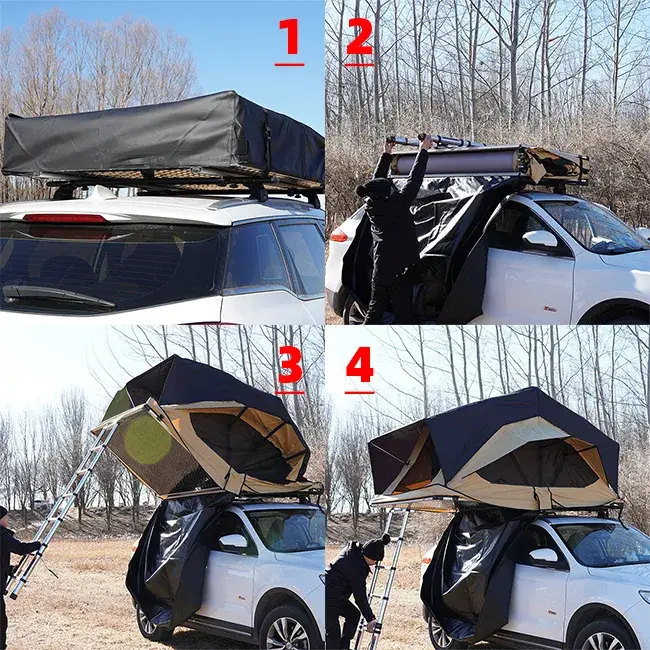
FAQ: inflatable rooftop tent fuel economy
How much MPG does a rooftop tent lose? Usually 2 to 4 mpg on the highway for a soft-shell inflatable; hard shells lose a little more.
Does an inflatable tent save fuel over a hard shell? Yes, because it packs flatter and lower, which cuts drag.
Is the fuel cost worth it? For most campers the annual premium is small next to the trips it enables.
Does removing the tent help? A lot. Taking it down recovers nearly all the loss on highway drives.
Compare the slim packed profile in our [inflatable rooftop tent collection](https://www.playdooutdoor.com/product-category/rooftop-tent/) and talk fit with [our team](https://www.playdooutdoor.com/contact/).