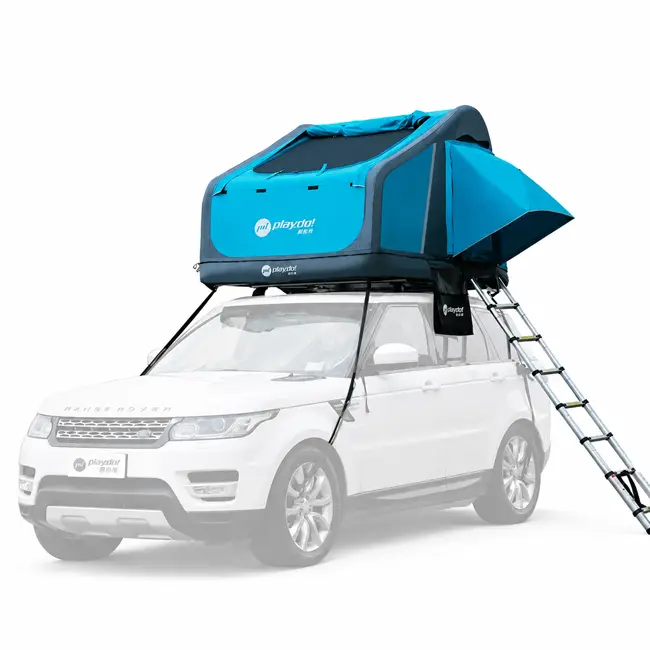
Rooftop tent accessibility is the question people ask quietly, usually after watching a parent hesitate at the bottom of a ladder. Getting a metre and a bit off the ground is the whole point of a rooftop tent, and it is also the thing that can put it out of reach. The good news is that most of the difficulty is equipment choice rather than fitness, and a few decisions at the buying stage change everything.
What makes rooftop tent accessibility hard
Three things stack up. The height of the climb, the angle and shape of the ladder, and the fact that you do it half asleep in the dark. Height gets the blame, but the ladder usually deserves it. A steep ladder with narrow round rungs hurts feet, feels unstable, and makes people climb slowly, which is when they lose confidence. A shallower ladder with flat rungs and a handhold at the top changes the same climb completely. The third factor is worth naming too, because most falls happen on the way down at night rather than on the way up in daylight.
Ladders: rungs, angle and grip
Aim for roughly 70 to 75 degrees from horizontal. That range is the standard safety guidance for leaning ladders, and it matters here because steeper than that feels like climbing a wall and shallower than that pushes your weight away from the rungs. Flat or D-shaped rungs are far kinder than narrow round ones, since they spread the load across your foot instead of one arch. Wider rungs help, and a rung spacing that matches a natural step beats a long stretch. Add a grip aid: rubber sleeves over the rungs, a pair of soft-soled camp shoes kept by the ladder, and a strap or handle at the top so the last move is a pull rather than a scramble.

Height: choosing a vehicle and a tent that work together
Total height is the lift of the vehicle plus the tent, and small differences matter more than they sound. A lower vehicle with a low-profile tent can sit well under two metres to the sleeping floor, while a lifted 4×4 with a tall tent can put the floor closer to two and a half. If the climb is the concern, work backwards: pick the lowest vehicle that suits your driving, then the lowest tent that suits your sleeping. Many inflatable models sit lower when packed than a hard shell does, which helps twice, since the packed height also decides whether you can reach the cover when you take it off.
Getting gear up without climbing
Most trips involve more lifting than climbing, and this is the part worth engineering. A dry bag with a clip and a length of cord lets you haul bedding up rather than carry it. Keep a folding step stool at the base of the ladder, because the first rung is the awkward one. Pack heavy things in soft bags rather than hard boxes, since a box needs two hands and a bag does not. If you camp with someone else, set a rule that the heavier load goes up first and the person on top pulls, because pulling is easier than lifting and nobody has to balance on the third rung with a duvet.
Night-time and bathroom trips
This is where people actually get hurt, so plan for it. Keep a torch in the same pocket of the same bag every trip, or use a head torch clipped to the ladder. Motion sensor lighting under the tent or inside the annex costs little and removes the fumble. A compact folding toilet or a simple bottle system inside the annex means a 2 am trip does not involve a ladder at all, and for a lot of older campers that single item is the difference between a good trip and a broken night’s sleep.

Being honest about alternatives
Sometimes the answer is that a rooftop tent is not the right call, and it is better to say that before the purchase than after. A ground-based inflatable tent with a high bed, a camper trailer, or a vehicle with a rear-mounted sleeping platform all remove the climb entirely. Some people split the difference: the rooftop tent for the fit, and a ground tent or annex room when a family member joins. None of that is a failure, and anyone who tells you otherwise is selling something. Rooftop tent accessibility is about matching the gear to the people using it, and there is no prize for the highest tent.
FAQ: rooftop tent accessibility
What ladder angle is safest? Around 70 to 75 degrees from horizontal. Steeper feels like a wall, shallower pushes your weight off the rungs.
Do flat rungs really help? Yes. Flat or D-shaped rungs spread the load across the foot instead of pressing into one spot.
How can I make the climb lower? Choose a lower vehicle and a lower-profile tent. Inflatable models often sit lower when packed than hard shells.
What helps most at night? Fixed lighting, a torch always in the same place, and a toilet option in the annex so nobody climbs at 2 am.
Talk to us about ladder options before you buy. See our [inflatable rooftop tents](https://www.playdooutdoor.com/product-category/rooftop-tent/) or message [our team](https://www.playdooutdoor.com/contact/) with your vehicle height.