OEM and ODM sound similar in a supplier conversation, but they describe different ways of bringing a rooftop tent to market. For an outdoor brand, the choice affects development time, design control, engineering work and the amount of risk carried before the first bulk order.
What OEM usually means in rooftop tent sourcing
In an OEM project, the manufacturer produces a product to the buyer’s specification. In the simplest private label case, that can mean selecting an existing rooftop tent, adding the buyer’s logo, choosing packaging and making agreed material or color changes.
OEM works well when the market opportunity is already clear and the buyer wants speed and control over the commercial presentation. It is especially practical for distributors and retailers that want to add a roof tent category without funding a long product-development process.
What ODM adds
ODM involves a deeper product-development role from the manufacturer. The supplier may help shape the structure, dimensions, materials, air-beam layout, accessories or user experience based on the buyer’s target market.
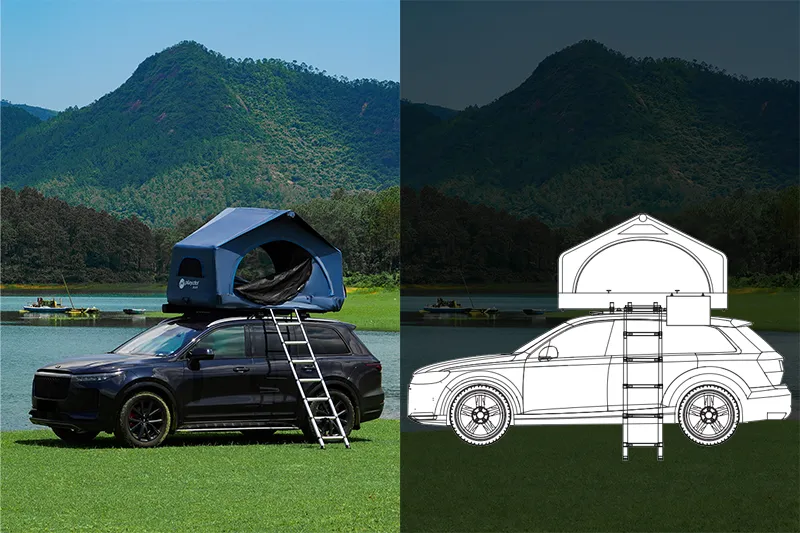
That does not automatically mean the project starts from a blank sheet. An ODM project can still use an existing technical platform as the starting point, then develop a differentiated configuration around a clear product brief.
Compare the two by five practical questions
1. How much design control do you need?
If the product concept already exists and the priority is branding, OEM is usually the more direct path. If the product needs a new configuration or meaningful functional changes, ODM gives the engineering process a bigger role.
2. How much development time can you accept?
An established OEM configuration can move to sampling faster because much of the product architecture already exists. ODM generally requires more rounds of technical discussion, prototyping and validation.
3. What is your first-order strategy?
For a test launch, an OEM project can reduce the amount of development work required before the market gives you feedback. Once sales data is available, a brand can decide whether a more differentiated ODM product is worth pursuing.
4. What needs to be unique?
A unique logo is not a unique product. Ask yourself whether your differentiation comes from appearance, materials, size, portability, accessories, setup method or a genuinely new structure. The answer helps determine how much ODM work is justified.
5. Who owns the important project information?
For custom work, document approved drawings, specifications, artwork and sample versions. Clear document control matters because the same project may evolve over several sample rounds and future production orders.
A useful path for growing brands
A practical strategy is to use OEM for the first market test, then use sales feedback to decide where deeper ODM development will add value. For example, a retailer may start with an existing inflatable rooftop tent, build a small assortment, identify which capacity and price points move, and then develop a differentiated model for the next season.
Why the distinction matters for inflatable rooftop tents
Inflatable rooftop tents include more than a fabric shell. Air columns, valves, mattress construction, packed dimensions and pressure management all influence the final user experience. When a project changes those elements, the manufacturer needs to evaluate the engineering impact, not only the appearance.
PlayDo currently offers multiple rooftop tent formats and states that its OEM/ODM services cover logos, colors, packaging and product development. That range allows buyers to choose a proven product for private label or discuss a more customized development path.
FAQ
Q: Is OEM cheaper than ODM? A: It can require less development work because it may use an existing platform, but the final price depends on materials, customization, tooling and order volume.
Q: Can an OEM project become an ODM project later? A: Yes. Many brands start with a proven model and use later market feedback to define a more differentiated product.
Q: When should a buyer choose ODM first? A: ODM makes more sense when the product concept, target customer or required feature set cannot be met well by an existing model.
Suggested Internal Links
PlayDo homepage – https://www.playdooutdoor.com/
SKIFF – https://www.playdooutdoor.com/product/skiff-inflatable-rooftop-tent/
Shell Wing – https://www.playdooutdoor.com/product/shell-wing-inflatable-rooftop-tent/
Contact – https://www.playdooutdoor.com/contact/