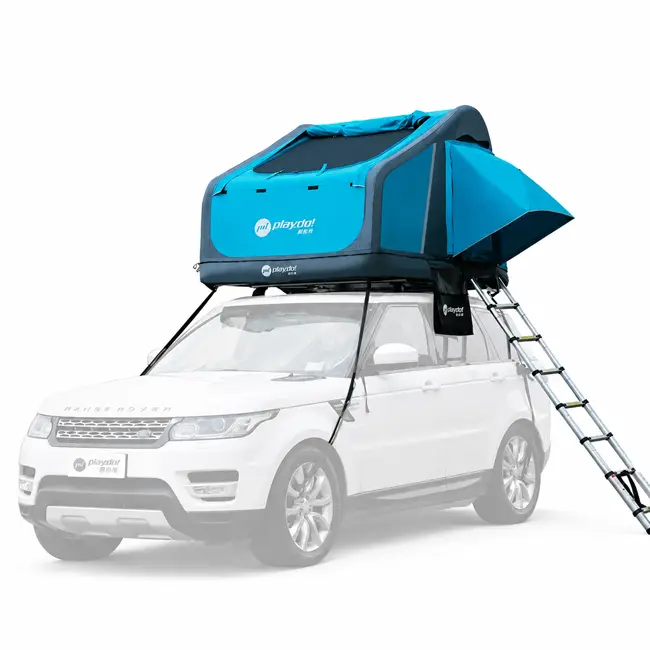
Inflatable rooftop tent overlanding is the sweet spot between a weekend camper and a full expedition truck. You get a bed that opens in minutes after a long dirt road, plus the range to stay out where cell signal ends. The trick is building the rig so the tent is the easy part and everything else backs it up.
Why inflatable rooftop tent overlanding fits remote trips
A soft-shell inflatable weighs less than a hard case and deflates for the rough stuff, so your center of gravity stays lower on washboard tracks. After a 200 km drive on corrugated road, you are not wrestling a 60 kg shell onto the roof; you are pumping air beams and boiling water. That speed matters when light fades and the nearest help is a long way off.
Power that does not quit
A dual-battery or a modest lithium box runs your pump, a fridge, and a light strip without draining the starter. Mount it where heat and water will not reach it, and carry a 100 W panel you can lay on the hood. Overlanders learn fast that the tent is cheap to run; the fridge is the hungry one.

Water, recovery, and the boring essentials
Carry more water than you think: five liters per person per day is a floor, not a target. A shovel, a board for sand, and a loaded recovery strap turn a stuck moment into a story instead of a call for a tow truck. A basic tool roll and spare fuses cost little and earn their place the first time something rattles loose.
Picking routes for inflatable rooftop tent overlanding
Start on graded roads and move to harder tracks as the rig proves itself. Tell someone your plan and your return time; a paper map still beats a dead phone. Air down for grip, but remember to air up before the highway, because an inflatable rooftop tent is not the only thing that hates heat and speed.
Keeping the load quiet on the trail
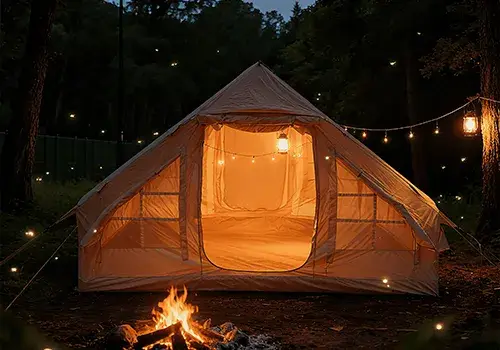
Loose gear rattles, rubs, and eventually breaks. Use rattle straps on the tent when it is stowed, and check the mounts at every fuel stop on long runs. A quiet rig is a reliable rig, and the habit of a five-minute walk-around at camp catches a loose bolt before it becomes a roadside failure.
Communication and a loose plan
A satellite messenger or a shared map link keeps someone home in the loop when you are past signal. Post your route and return date, then stick to it or send an update. Overlanders who skip this are the ones who turn a flat tire into a front-page search. A loose plan is not less freedom; it is the safety net that lets you take the rough road without worrying the people who wait. Keep the plan loose on purpose, because weather and washboard change a day’s reach, and a rigid timetable pushes tired driving.
FAQ: inflatable rooftop tent overlanding
Is an inflatable tent tough enough for off-road? Yes, deflated it rides low and survives corrugation better than a hard shell.
How much power do I need? A 50 to 100 Ah lithium box covers pump, fridge, and lights for a few days.
What is the one item I should not skip? Water. Five liters per person per day, minimum.
Do I need a built trailer? No. A stock SUV with the right tires and recovery gear goes surprisingly far.
Build your base camp on our [inflatable rooftop tent collection](https://www.playdooutdoor.com/product-category/rooftop-tent/) and plan fit with [our team](https://www.playdooutdoor.com/contact/).