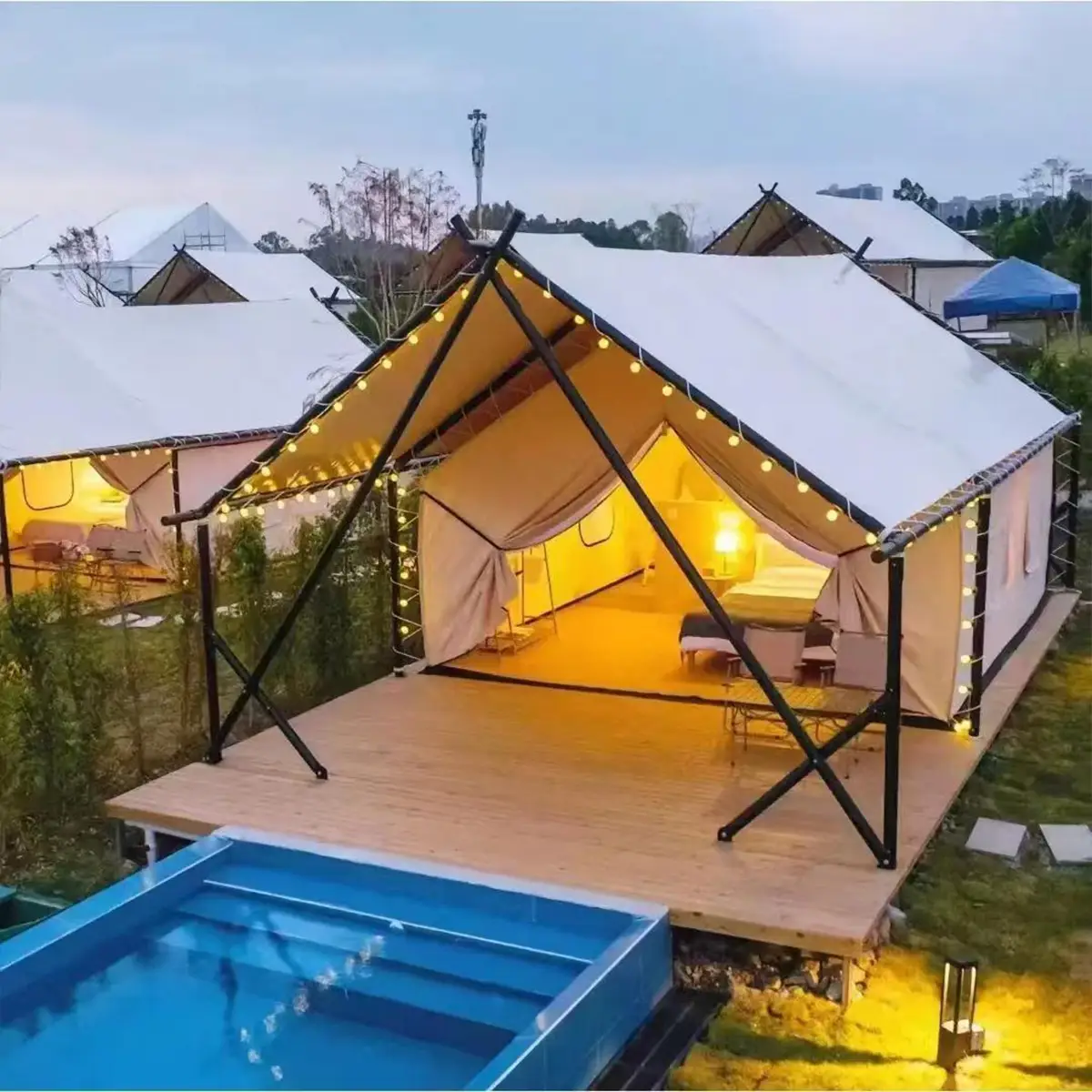
A bell tent vs inflatable cabin tent comparison usually starts in the wrong place, with floor area. Both give you standing height and room for a family, so space is rarely the deciding factor. What actually separates them is how many people it takes to pitch, how the shape behaves once the wind picks up, and whether you are setting up every weekend or leaving standing for a season.
Shape decides almost everything
A bell tent is a cone: one centre pole, one apex, walls that slope outward to a guy line ring. That shape sheds wind beautifully because nothing presents a flat face to it, which is why the design survived a century of use before modern fabrics existed. The cost of that shape is usable floor area. A 5 metre bell tent gives you a large circle, but the outer third of that circle is too low to stand in, so the practical space is smaller than the diameter suggests.
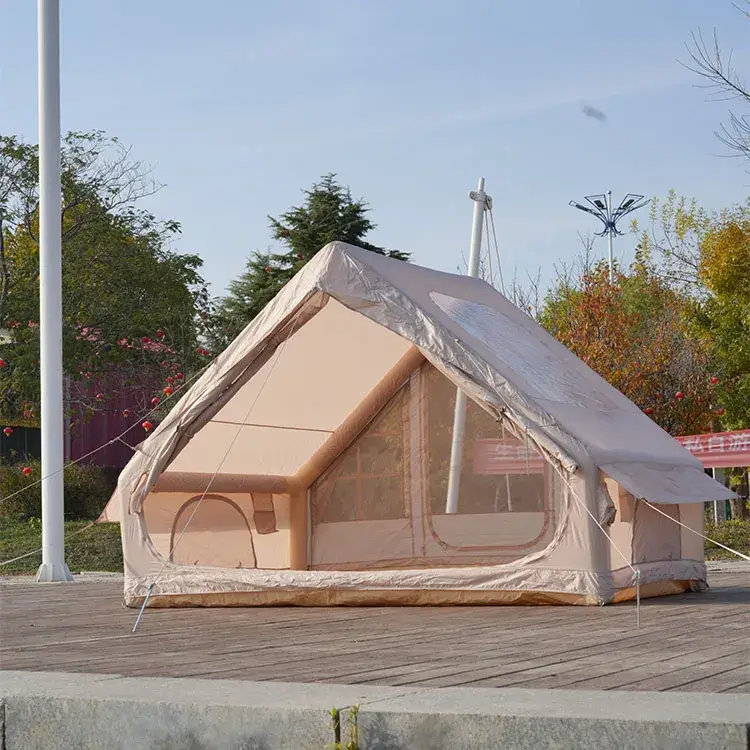
An inflatable cabin tent is a box with rounded edges. Vertical walls mean almost all the floor is usable, you can push beds against the side, and you can actually plan furniture. The trade-off is that flat panels need guying, and the structure depends on air pressure staying where it should be.

How many people does it take
This is the part vendors gloss over. One person can pitch a small bell tent, but once you get past 5 metres the canvas becomes genuinely heavy and wrestling it around a centre pole is a two or three person job, especially in wind. An inflatable cabin tent is often the better solo option for exactly that reason: you roll it out, pump the beams, and the structure lifts itself as pressure builds. For glamping operators who set up once and leave standing, that difference evaporates. For families arriving Friday evening in the rain, it is the whole decision.
Weather behaviour in bell tent vs inflatable cabin tent
Wind: the cone wins. Wind flows around a bell tent instead of pushing against it, and a properly guyed bell tent in a storm is genuinely reassuring. Cabin shapes need every guy line, ideally doubled on the windward side, and they will drum in gusts in a way some people find hard to sleep through.
Rain and snow: both handle rain fine when pitched well, though flat inflatable roofs need attention so water does not pool. Snow is the more useful separator. A sloping cone sheds snow naturally. A flat or gently arched inflatable roof accumulates it, and accumulated snow is weight plus a slow sag you should brush off before bed.
Heat: canvas breathes, which is why bell tents feel cooler in direct sun. Coated synthetics used in inflatable tents reflect heat better in the morning and can feel warmer by mid afternoon. Both benefit from shade, and neither benefits from being pitched on hot sand without a groundsheet.
Living in it for more than a weekend
Long stays change the maths. A bell tent tolerates a stove jack and a flue because canvas handles heat better than synthetic fabrics do, though any stove setup needs correct clearance, a spark arrestor, and never a running stove near closed fabric. If a wood stove is part of your plan, that question alone may end the comparison. Inflatable cabin tents are easier to partition into rooms with fabric dividers because the walls are vertical and square, and they take a carpet or matting more naturally. Storage is also better, since vertical walls mean shelves and hanging organisers actually fit.
Transport is the other practical point for bell tent vs inflatable cabin tent. Canvas is heavy and bulky when wet, so a large bell tent needs a decent vehicle and ideally two people to load. Inflatable tents pack into a smaller dry bag for the same floor area, which matters if you are moving camp every other day.
Which one suits your use
Buy a bell tent if you set up once and stay, you camp in open windy country, you want canvas breathability, or you plan to add a stove. Buy an inflatable cabin tent if one person often pitches alone, you want the whole floor usable, you move camp frequently, or you are kitting out a glamping site where quick turnaround between guests pays for itself. Neither is the better product in the abstract. The better one is whichever matches how you actually camp, which is why talking through a typical trip helps more than comparing spec sheets.
For seasonal operator maths, our [glamping hotel tent guide](https://www.playdooutdoor.com/product-category/campsite-tent/glamping-hotel-tent/) covers commercial configurations, and you can compare both shapes directly in our [bell tent range](https://www.playdooutdoor.com/product-category/campsite-tent/bell-tent/) and [inflatable cabin tents](https://www.playdooutdoor.com/product-category/campsite-tent/inflatable-cabin-tent/).
FAQ: bell tent vs inflatable cabin tent
Which handles wind better? The bell tent. Its cone shape sheds wind, while cabin shapes need full guying to avoid drumming.
Can one person pitch either? Usually yes for an inflatable cabin tent. Large bell tents over 5 metres are realistically a two person job.
Can I use a wood stove? Canvas bell tents generally take a stove jack better than synthetic inflatable fabrics. Any stove needs correct clearance and ventilation.
Is all the floor usable? No in a bell tent, where the outer third is below head height. Yes in most inflatable cabin tents, since the walls are near vertical.
Reviewed by the PlayDo Outdoor product team, October 2026. Stove use and fire rules vary by site, so check local restrictions first.