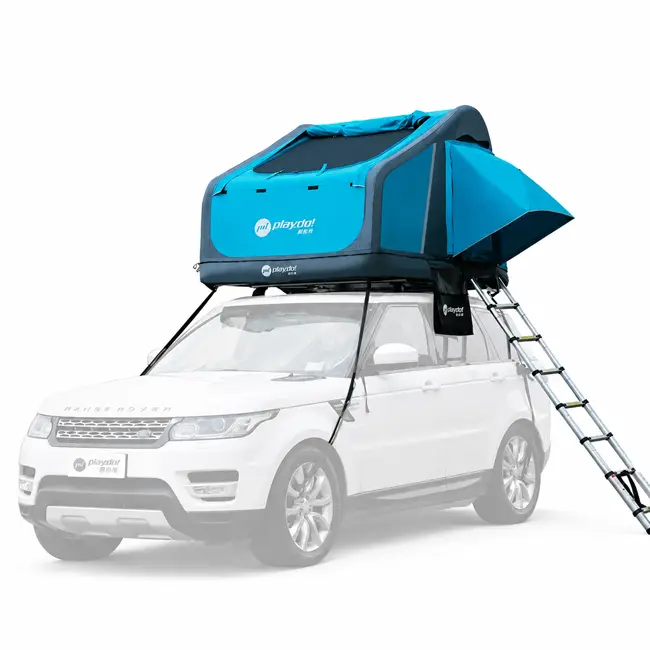
High altitude rooftop tent camping puts your gear in conditions it never sees at the trailhead. Thinner air, colder nights, harder sun, and weather that turns in twenty minutes. None of it is dangerous if you plan for it, and inflatable tents actually handle one part of it better than most people expect.
What altitude does to an inflated air beam
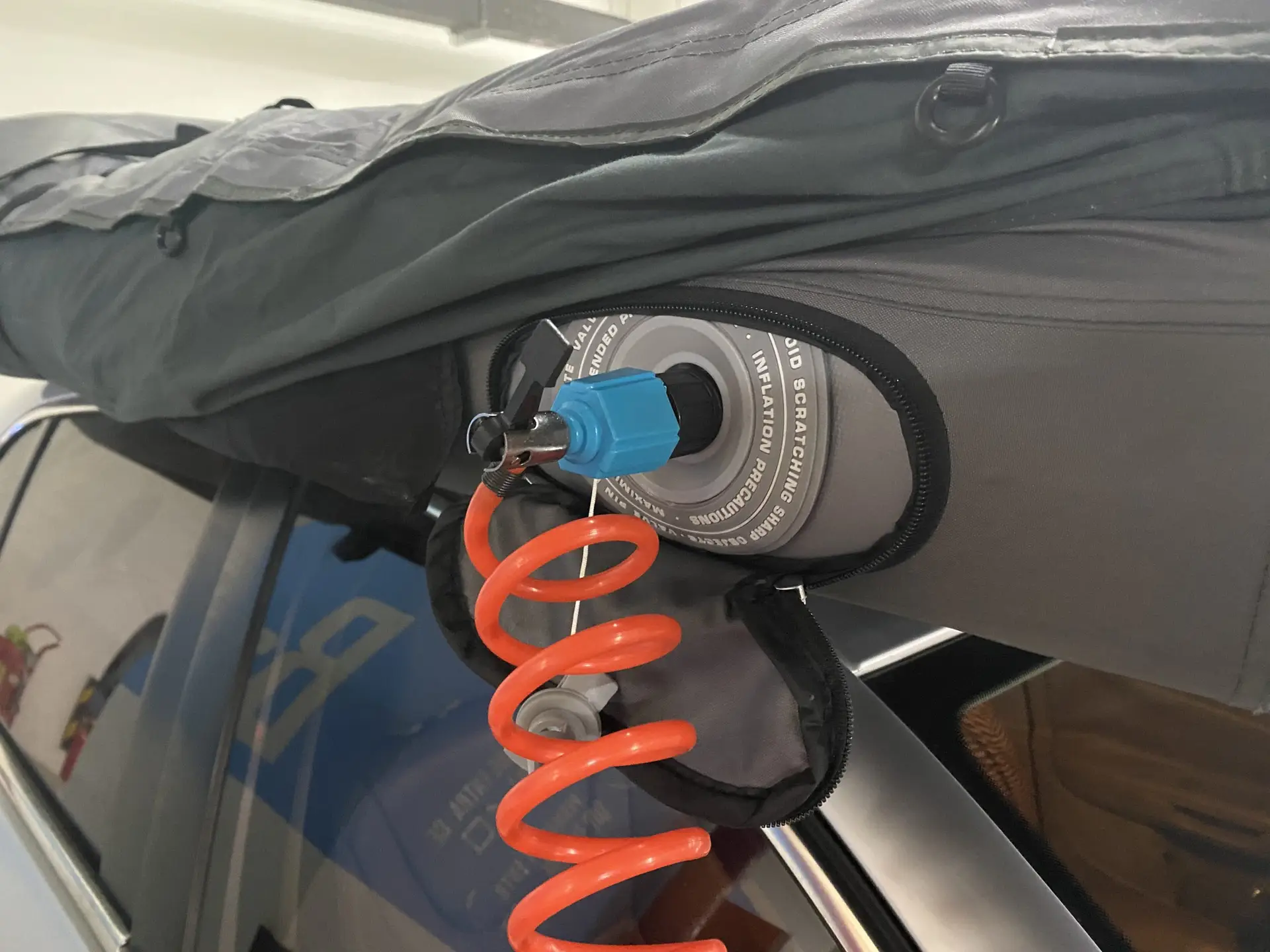
This is the part nobody explains. Air pressure at 3,000 metres is roughly 70 kPa against about 101 kPa at sea level. If you inflate your beams in a valley and drive up a pass, the outside pressure drops while the air inside stays put, so the beam reads noticeably firmer at the top, on the order of 4 psi of extra gauge pressure. Nothing bursts, but a beam pumped hard at 200 metres can end up over its rated pressure at 3,000. The fix is simple: inflate at camp, not before you climb, and bleed a little air from each valve if the fabric feels drum tight.
Cold nights work the other way
Overnight temperature drops reverse the effect. Air loses roughly 7 percent of its pressure for a 20 degree Celsius fall, so beams that felt right at dusk will read soft by 3 am. That sag is physics, not a leak. Top the beams up before bed rather than at midnight, and expect one short pump session in the morning. Anyone who spends a first alpine night in an inflatable tent and panics about a slow puncture has usually just met thermal contraction.
Sleeping warm above the treeline
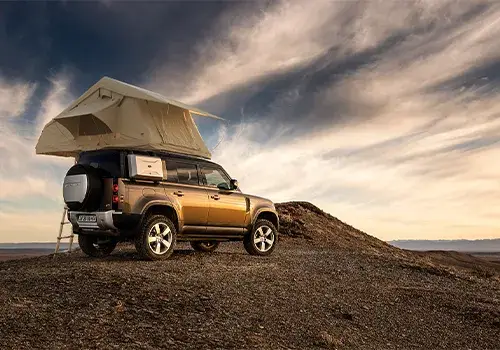
Every 1,000 metres of gain costs you roughly 6 degrees Celsius, and clear alpine skies pull more heat out through radiation than a cloudy lowland night does. A rooftop tent already lifts you off the cold ground, which helps, but the mattress underside is still exposed to moving air. Put a closed cell mat or a reflective layer under the mattress, sleep in a bag rated below the forecast low rather than at it, and keep one vent cracked. Sealing everything shut makes condensation, and damp insulation stops insulating.
Sun, wind and the rest of high altitude rooftop tent camping
UV intensity climbs about 10 percent per 1,000 metres, so fabric, skin and plastic all age faster up there. Park with the door away from prevailing wind, use every guy line, and treat any exposed ridge as a wind test you did not sign up for. Afternoon storms are a pattern in most mountain ranges, so pitch by early afternoon and eat before the weather arrives. Drink more than you feel like drinking. Dry air at elevation pulls water out of you through breathing alone, and mild dehydration reads exactly like altitude sickness.
Choosing where to park
Flat ground matters more up high because you cannot always chock into soft dirt. Look for a pitch out of the wind funnel, off the ridge line, and away from anything that could shed rock or snow. Avoid the lowest point of a bowl, since cold air pools there and you will wake up several degrees colder than a spot ten metres uphill. Check whether your route has a hard seasonal closure, and never assume a pass that was open in June is open in October.
A short checklist for high altitude rooftop tent camping
Inflate at camp and bleed pressure if the beams feel hard. Carry a hand pump as backup, because cold drains batteries fast. Add a layer under the mattress. Pack a warmer bag than the forecast suggests. Set up before the afternoon builds. Watch your passengers for headache and nausea on the first night above 2,500 metres and drop elevation if it worsens. None of this is exotic, it is just the same trip with less margin, and the people who enjoy it most are the ones who arrive early and go to bed dry.
FAQ: high altitude rooftop tent camping
Do air beams pop at altitude? Not in normal use, but pressure rises as you climb, so inflate at camp and bleed a little if the beam feels drum tight.
Why do the beams go soft at night? Cold air contracts. A 20 degree drop costs roughly 7 percent of the pressure, so top up before bed.
What temperature rating do I need? Assume roughly 6 degrees colder per 1,000 metres of gain, then pick a bag rated below the forecast low.
Is a rooftop tent warmer than a ground tent up high? Usually yes, because you are off frozen ground, though the mattress still needs insulation underneath.
Planning an alpine season? Start with a tent built for it from our [rooftop tent collection](https://www.playdooutdoor.com/product-category/rooftop-tent/), or [get in touch](https://www.playdooutdoor.com/contact/) with questions about beam pressure ratings.