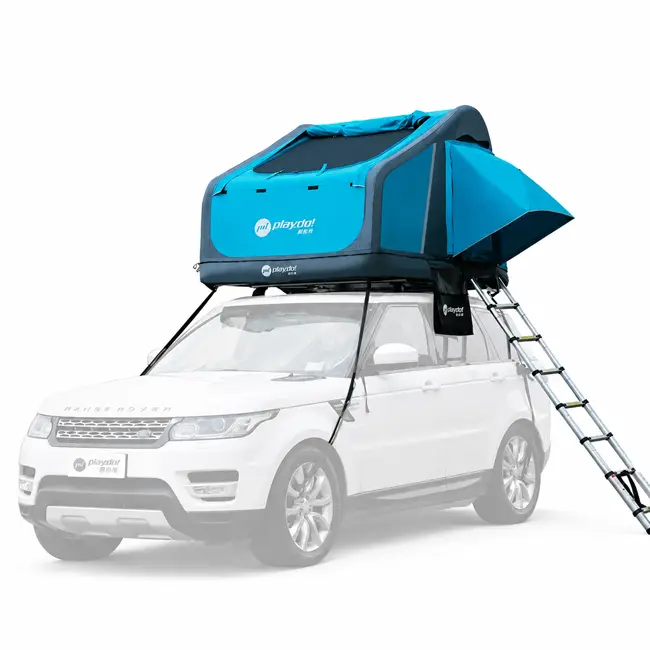
Rooftop tent flexible support 2 is the pad that sits between your roof and an inflatable rooftop tent. It gives the tent a flat, slightly cushioned surface with no hardware poking through, and it spreads the load across the whole roof instead of two narrow bars. It is the updated version of our EVA flexible support, and it is built around camp life: you fit it when you arrive, and it packs down small when you leave.
What rooftop tent flexible support 2 is
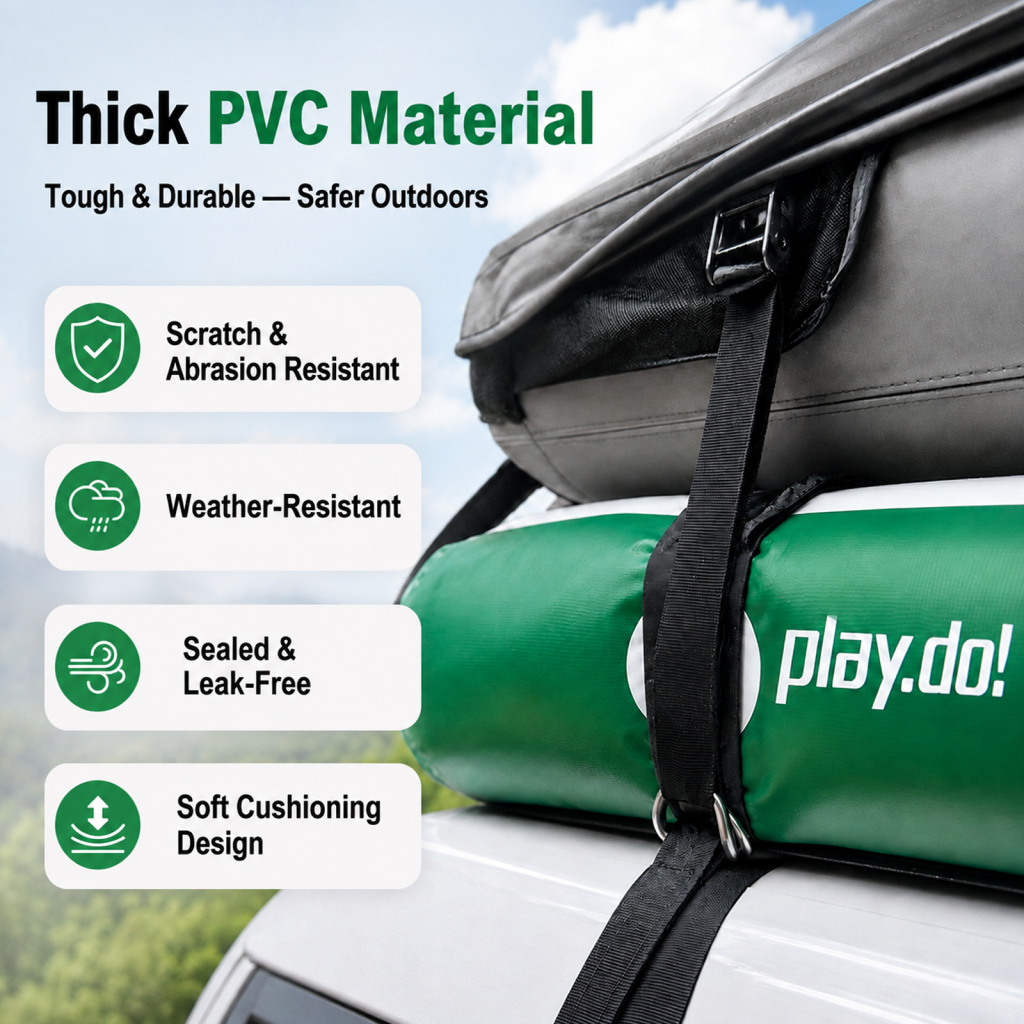
Flexible Support 2 is a drop-stitch pad. Thousands of internal threads hold two fabric faces at a fixed distance, so it inflates into a flat board rather than a balloon, which is how a main body around 1.6 kilograms keeps its shape under load. It carries four D-rings for tying down whatever you want beside the tent, and a pair of straps with a breaking strength around 1000 kilograms that run through the door frames or around factory rails to hold the pad down. Breaking strength is a material test figure, not a carrying limit, and the gap between those two numbers is where most people get confused.
Its job is specific: be the base under an inflatable rooftop tent. Not a cargo platform, not a replacement for cross bars. A flat, quiet surface for the tent to sit on.
Why a padded base beats two bars
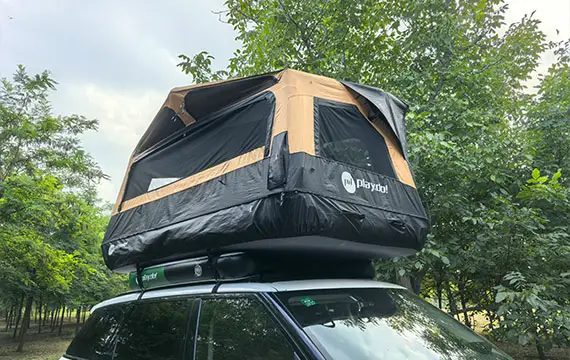
Steel cross bars put the whole load onto two narrow lines. Anything rigid sitting across them presses into those two points, and the tent floor has to bridge the gap between them. A wide pad spreads the same load across the entire roof contact area instead, so the tent floor gets support everywhere it touches. That also means no protruding brackets under the mattress and no hardware digging into the fabric. The other advantage is what happens when you are not using it: a pad deflates and rolls up, and it takes up a fraction of the space that a fixed bar rack does in a garage or a boot.
Rooftop tent flexible support 2 at camp, and on the road
Set it up when you arrive. Wipe the roof, lay the pad, inflate it to the pressure in your manual, strap it down, then mount the tent. When you break camp, deflate it and pack it away before you drive on. That rhythm is the point of a pad: it appears at camp and disappears for the drive.
Carrying gear on the road is a bar rack’s job. If you want kayaks, boards, skis or a roof box travelling with you, buy a bar rack that publishes a dynamic rating and fit it to your vehicle specification. That is a different product for a different task, and matching the tool to the task is cheaper than making one tool do both badly.
Static load is the number that applies
Because this pad works at camp, the figure that matters is static roof load, the weight your roof takes while standing still. Vehicle handbooks usually list a dynamic figure for driving and a much higher static figure for camping, and the static number is the one that governs a night under a tent. Your ceiling is still the lowest limit in the chain: the vehicle handbook, the tent, and the pad. Confirm all three before you load anything, and do not treat strap breaking strength as a carrying limit.
Getting the setup right
Fit it to a clean roof. Grit trapped under the pad is the most common cause of slow punctures, so wipe the roof down before every install and keep sharp gear out from underneath. Inflate to the pressure printed in your manual, then check it again after the first cold night, because pressure drops as air cools. Some models sleep better at a slightly lower setting than they use for setup, so follow the specification rather than guessing.
Check strap routing around door seals and frame edges, particularly on frameless doors or panoramic roofs, since strap pressure on the wrong edge bends trim. Measure your roof beyond the rails and match the pad length, because overhang flaps and wears.
Checks before you buy
Confirm the pad is the right length for your roof and matches the tent model you own. Confirm your door frames can take strap pressure. Confirm the roof is free of rail or box hardware that would press into the pad. And be honest about how you camp: if you want a tent permanently mounted and driven between sites every weekend, a bar rack with the tent maker’s mounting hardware is the better answer, and a pad is the one for people who set up and pack down.
For the tents this pad is built to sit under, see our [inflatable rooftop tents](https://www.playdooutdoor.com/product-category/rooftop-tent/inflatable-rooftop-tent/), check ladder and load considerations in our [rooftop tent accessibility guide](https://www.playdooutdoor.com/rooftop-tent-accessibility/), and browse the rest of the kit in our [tent accessories range](https://www.playdooutdoor.com/product-category/tent-accessories/).
FAQ: rooftop tent flexible support
What is Flexible Support 2? The base pad that goes under our inflatable rooftop tents, updated from the earlier EVA flexible support. It gives the tent a flat, cushioned surface across the whole roof.
Can I leave it inflated while driving? Deflate and stow it before you drive on. The inflated pad is a camp setup, and it packs down small for the drive.
Can it carry a kayak or a roof box? That is what a bar rack is for. This pad is the tent base.
Which load figure should I follow? Your vehicle handbook’s static roof load, plus the limits printed for your tent and pad. The lowest of the three wins.
What changed from the EVA flexible support? Flexible Support 2 is the updated version of that pad, built for the same job with a refined drop-stitch build and a wider contact surface.
Reviewed by the PlayDo Outdoor product team, October 2026. Follow the manual supplied with your model, and confirm roof load limits in your vehicle handbook before loading.